If you’ve ever worked with us here at the rack production line supplier, you know that setting up a new line isn’t just about unpacking machines and plugging them in. I get dozens of calls a week from plant managers, operations directors, and startup founders asking the same question: “How long will it take to get my rack production line up and running?” And honestly? The answer isn’t one number—it’s a framework, a series of moving parts that depend on so many variables. Let me break this down like I would for a client sitting across my desk, no fancy jargon, just real talk from someone who’s been installing these lines for 18 years. Rack Production Line
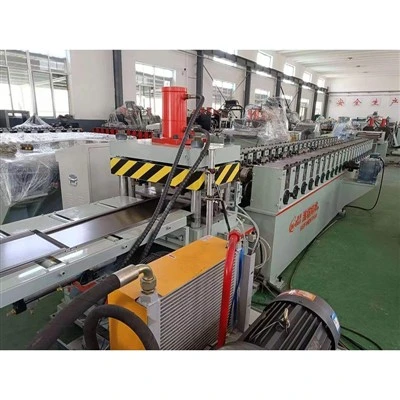
First, let’s start with the basics. A new rack production line isn’t a single machine—it’s a synchronized system of cutting, punching, bending, welding, powder coating, and final assembly. The timeline starts long before the first box of equipment is delivered to your factory, and cutting corners at this stage is where most clients run into delays. I remember a client in Dallas a few years back who skipped the site assessment step to save $1,500. When our team showed up to install his line, we realized his factory floor had a 12-inch height restriction on overhead cranes, and his electrical panel only had 200 amps instead of the 400 amps we needed for the robotic welding station. That delay pushed his startup back six weeks, cost him more in overtime than the assessment ever would have, and he still mentions it as his “biggest mistake” when we chat at trade shows.
So, the first phase: Pre-Installation Planning. How long does this take? It’s 2 to 6 weeks, depending on how prepared your team is. During this phase, our project managers (each with 10+ years of rack line experience) will walk your facility, measure floor space, check power and air supply lines, review your current production volume targets, and tailor the line to your specific needs. If you’re expanding an existing line, we can speed this up to 2 weeks because we already know your floor’s layout and utility specs. But if you’re building a new factory from scratch and don’t have any of those details worked out? We’ll work with your architects to design the power and floor layout, which adds 2 to 4 weeks to this phase. During this time, we also finalize customizations—like adding a station for specialized server racks or adjusting bending speeds for heavy-duty telecom racks—and order any custom parts, which ensures there are no surprises once the installation starts.
Next comes the Equipment Delivery and Uncrating phase. This one seems simple, but it’s where shipping logistics throw a lot of clients off. Smaller lines (for low-volume production, 500 to 1,000 racks a month) ship in 12 to 15 crates, and delivery takes 1 to 2 weeks from our manufacturing facility to your dock. Larger lines (high-volume, 3,000+ racks a month) ship in 25 to 30 crates, and because they include heavy machinery like robotic welders and powder coating ovens, they often require flatbed trucks and specialized shipping crews. That delivery timeline jumps to 2 to 3 weeks for these larger lines, and sometimes adds extra time if your facility is in a remote area—think rural Montana or northern Maine, where shipping routes are limited. Once the crates arrive, our team will supervise uncrating and placement to make sure every machine is set exactly where we mapped out during the site assessment. Rushing this part to get production started faster leads to misaligned cutting stations or bent frame parts, so we take our time here.
Then the real work begins: Installation and Mechanical Setup. This is the phase where our technicians (certified, with minimum 5 years of rack line experience) connect every machine, align conveyor lines, hook up hydraulic and air systems, and test basic functionality. For a small, entry-level line, this takes 3 to 4 weeks. We’ll set up the shear and punch stations, calibrate their cutting tolerances to within 0.5 millimeters (critical for rack parts that need to fit together perfectly), and connect the manual welding stations. For a mid-sized line, which includes a robotic welding cell and a basic powder coating booth, this jumps to 4 to 6 weeks. The robotic cell takes extra time to mount, wire, and align so the arm can move seamlessly along the rack frame. For a high-volume line with a fully automated powder coating oven, sorting station, and robotic assembly tools? That’s 6 to 8 weeks of mechanical setup. I once worked on a line for a major telecom client in Arizona that had a custom end-of-line testing station, and the mechanical setup took 7 weeks just because we had to integrate that custom test unit into the existing conveyor flow. I always tell clients: if you want production to run smoothly later, this phase can’t be rushed. We’ll adjust every joint, test every conveyor link, and make sure every machine is leveled properly—even if that means staying an extra day on the job.
After mechanical setup comes the Software Programming and Calibration phase, which most clients don’t account for. This is where the line goes from a group of separate machines to a synchronized system. Our in-house engineers will program the line’s control software to match your specific rack designs. For basic lines that produce standard 19-inch server racks, this takes 1 week. We’ll set the cutting lengths, punch hole patterns, and bending angles to match your product specs, then run test parts to double-check tolerances. For lines with robotic tools or automated sorting, this phase takes 2 to 3 weeks. Programming a robotic welder to follow a custom rack frame path, for example, means testing 20+ different weld spots to make sure they’re strong enough to meet industry standards (we follow ANSI/EIA-310 standards for all our rack lines, by the way, so you never have to worry about compatibility with servers or other IT equipment). If you’re producing custom racks with varying sizes or shapes, we’ll also program the line to switch between designs quickly—something that takes extra calibration to avoid downtime between production runs.
Once the software is set, we move on to Operator Training and Trial Runs. This is arguably the most important phase, because a great line is useless if your team doesn’t know how to run it. We provide on-site training for up to 8 of your operators, maintenance techs, and line supervisors. For small lines, this takes 1 week of hands-on learning: operators will practice loading metal sheets, adjusting machine settings, and troubleshooting basic issues like jammed parts. For larger lines with robotic or automated tools, this is 2 weeks of training. We’ll run full trial production runs, producing 50 to 100 racks, and work with your team to fix any kinks—like adjusting a conveyor speed that’s causing parts to back up or tweaking the powder coating temperature to avoid uneven finishes. During this phase, we also train your maintenance team to perform regular checks, like lubricating conveyor belts or cleaning powder coating filters, to avoid unplanned downtime later. I always tell clients: the time we spend training your team here saves you months of headaches down the line. I’ve seen a client in Chicago try to skip operator training, bring in untrained staff, and have their line down for 3 days because a jammed cutting station wasn’t fixed correctly. The cost of that downtime was 10 times what the training would have cost.
Now, let’s add all these numbers up, and get to the question everyone’s asking: the total timeline. For a small, entry-level rack production line (low-volume, standard racks), the total time is 9 to 15 weeks. For a mid-sized line (mid-volume, basic automation), that’s 13 to 22 weeks. For a high-volume, fully automated line (high output, robotic tools, custom features), it’s 18 to 30 weeks. But wait—these are the timelines for a standard installation. What happens if there are delays outside of our control? Supply chain issues for custom parts, unexpected facility problems (like needing to upgrade electrical lines), or changes to your product design mid-project? Those can add 2 to 6 weeks, depending on the issue. That’s why we always build a 10% buffer into our timelines, and keep our clients updated every step of the way—we send weekly progress reports, and assign a dedicated project manager to answer any questions, so you never feel like you’re in the dark.
I know what some of you are thinking: “Can’t you just speed this up? I need my line running in 8 weeks.” The short answer is no, and here’s why: every step is critical to making sure your rack line is safe, compliant, and efficient. Cutting corners on pre-installation planning leads to downtime. Skipping proper calibration leads to bad parts that get rejected by your customers. Rushing operator training leads to human error and unnecessary repairs. We’ve been in this business for almost two decades, and we’ve seen what happens when someone tries to set up a line too fast: they end up with a line that breaks every other week, produces parts that don’t meet specs, and costs them more in the long run. Our goal isn’t just to sell you a rack production line—it’s to set you up for long-term success, which means taking the time to do it right.
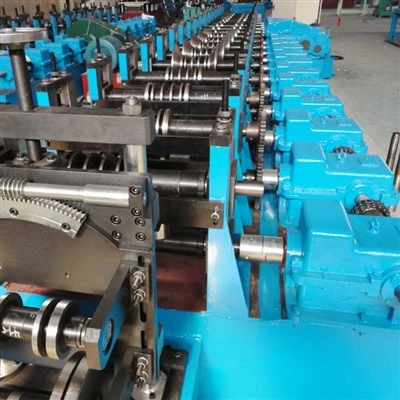
If you’re ready to get started with your rack production line, or you have questions about timelines for your specific facility, our team is here to help. We’ll walk you through every step, give you a realistic timeline tailored to your needs, and make sure your line is installed, trained, and ready to produce high-quality racks as quickly as possible without cutting any corners. Don’t leave your production timeline to chance—reach out to our team today to start planning your new rack production line.
Other Customized Equipment References:
- ANSI/EIA-310-D, Standard for Telecommunications and Data Communications Racks, Panels, and Associated Equipment
- Manufacturing Extension Partnership (MEP), “Timeline for Setting Up a New Production Line”, 2022
- International Society of Automation (ISA), “Best Practices for Robotic Production Line Integration”, 2021
- Powder Coating Industry Association (PCIA), “Operational Guidelines for Automated Coating Lines”, 2023
Weifang Yue Jun Machinery Co., Ltd.
With abundant experience, we are one of the most professional rack production line manufacturers in China. We warmly welcome you to buy durable rack production line made in China here from our factory. We also accept customized orders.
Address: Kuiwen District, Weifang City, Shandong Province
E-mail: adrian@yuejunmachinery.com
WebSite: https://www.yuejunmachinery.com/
