What’s the Turning Radius of an Electric Passenger Tricycle? Electric Passenger Tricycle

If you’ve ever navigated a tight crowded market alley, squeezed between parked cars on a narrow city street, or spun around in a tiny residential driveway, you know how much difference a tight turning radius makes for any small vehicle. As a supplier of electric passenger tricycles, this is one of the most common questions I get from potential buyers—whether they’re a small business owner running a neighborhood shuttle, a city official testing last-mile transit, or someone who’s curious why these three-wheelers feel way more agile than a standard car.
First, let’s get one thing straight: there’s no single “one-size-fits-all” turning radius for electric passenger tricycles. Way too many factors change this number, and if a supplier tells you a hard, generic number, they’re either not being honest or cutting corners on engineering to save a buck. I’ve been in this game for over a decade, testing every design tweak under the sun, and the turning radius is such a critical balance between maneuverability, stability, and load capacity that it’s non-negotiable to nail for each specific model.
Let’s break down what actually affects this number, because that’s way more useful than just throwing out a random measurement. First up, wheelbase. The wheelbase is the distance between the front axle and the rear axles—wait, hold on, most electric passenger tricycles have two rear wheels, right? So technically, it’s from the front center to the midpoint of the rear two. A shorter wheelbase equals a smaller turning radius, plain and simple. But here’s the catch: shorter wheelbase means less stability when you’re carrying 3-4 passengers plus all their stuff, especially if you’re driving on uneven, bumpy roads (which most of our customers are). I once had a customer in rural India who begged for an extra-tiny wheelbase to weave through their village’s goat paths—we did a prototype, but they came back a month later saying it rolled too easy when they hit a pothole, so we had to adjust. So it’s a tradeoff, not a checkbox.
Next, steering geometry. This is the fancy engineering term that most people don’t think about, but it’s huge. The angle of the front wheels when you turn, the offset of the steering pivot, even the tire size—all of this changes how sharp you can turn without scraping the side of the vehicle. Most basic tricycles have a single front wheel, right? That makes turning simpler, but not always better. Wait, actually, a lot of our mid-range models have two front wheels for extra stability, and that changes the steering geometry entirely. A two-front-wheel setup can have a tighter turning radius than a single front wheel if designed right, because the wheels don’t interfere with each other’s turn. I’ve tested both: on a 180-degree turn, our single-front-wheel shuttle has a radius of about 4.2 meters, while our two-front-wheel tour model (which fits 5 passengers) only needs 4.5 meters. Most cars, by the way, have a turning radius between 5-6 meters, so even the tour model beats a standard sedan.
Load weight is another big one. If you have a tricycle empty, it can turn way sharper than when it’s fully loaded with passengers, luggage, or delivery cargo. We do all our turning radius tests with the maximum rated load for each model, because that’s what matters to our customers—they don’t drive empty 90% of the time. For example, our compact city shuttle is rated for 4 passengers plus 50kg of luggage, and its turning radius is 4.1 meters empty, 4.3 meters full. That’s a 5% difference, but it’s enough to make or break a driver’s ability to make that tight corner in a busy downtown area.
Terrain and use case matter too. If you’re driving on smooth, paved city streets, you can have a tighter turning radius because the roads are predictable. But if you’re driving on dirt, gravel, or hilly roads, you need a wider turning radius to keep the vehicle from tipping when you turn. Our off-road electric passenger tricycle, designed for mountain villages, has a turning radius of 5 meters, which is wider than our city models, but it’s way more stable on uneven ground. That’s not a flaw—it’s a feature tailored to what the vehicle is actually used for.
Now, let’s talk about the numbers you actually care about, because everyone asks for a clear answer. Here’s the breakdown of our most popular models, all tested per ISO safety standards (yes, we care about that, even if it’s not the flashiest part of the job):
- Compact City Shuttle: Designed for 3 passengers, perfect for downtown shuttles or campus transit. Turning radius (max load): 4.3 meters, or about 14 feet for folks who use imperial units. This is our tightest model, built specifically for narrow streets and pedestrian zones where you can’t swing a U-turn wide.
- Mid-Range Neighborhood Shuttle: Fits 4 passengers, works for residential shuttles or small tour groups. Turning radius: 4.5 meters (14.8 feet). A little extra for stability, but still way tighter than most vans.
- Full-Size Tour Tricycle: 5 passengers, has extra legroom and under-seat storage. Turning radius: 4.7 meters (15.4 feet). We balanced a longer wheelbase for passenger comfort with steering tweaks to keep the turning radius small enough for city use.
- Off-Road Village Tricycle: 4 passengers, built for rough terrain. Turning radius: 5.2 meters (17 feet). Wider for stability on hills and dirt, but still smaller than a standard pickup truck, which is key for rural roads that aren’t built for big vehicles.
Wait, but let’s bust a common myth here: a smaller turning radius isn’t always better. If you’re a driver who’s used to big cars, an extra-tight turning radius can feel twitchy, especially at higher speeds. That’s why we never just chase the smallest number possible—we test drive every model with real drivers, the same ones who will actually use the tricycle, for 100+ miles on their actual routes. I had a driver in Bangkok last year who tested our prototype compact shuttle; he said it turned sharp, but it was too easy to overcorrect when he was picking up passengers at a busy bus stop. So we adjusted the steering damping (that’s the resistance in the steering wheel) a little, and now it’s perfect. That’s the stuff no supplier tells you about—we don’t just run CAD simulations, we get real people in the seat, in their environment.
Another thing that people don’t realize: electric passenger tricycles don’t have a transmission like gas-powered ones, so there’s no bulky engine taking up space under the floor. That lets us design the wheelbase and steering geometry more efficiently, without having to build around a big gas tank or engine. That’s why electric trikes can usually have a tighter turning radius than their gas counterparts, same number of passengers. We’ve seen gas passenger tricycles from other brands with turning radii of 5.5 meters for 4 passengers, while our electric model is 4.5 meters—huge difference for tight spaces.
Now, why does this even matter? For our customers, it’s all about profitability and accessibility. If your tricycle can turn around in a 4-meter radius, you don’t need a big space to pick up and drop off passengers. You can make more stops, go to more neighborhoods, and operate in areas where larger vehicles are banned or can’t fit. For example, a shuttle driver in Lagos told us that before they switched to our compact trikes, they had to make a 10-minute detour every time they hit a one-way street because their old van couldn’t turn around. With our tricycle, they just spin in the middle of the narrow street and get back on route. That’s 10 extra trips a day, which adds up to way more revenue.
If you’re in the market for an electric passenger tricycle, don’t just ask for a turning radius number. Ask about the wheelbase, steering design, and load capacity it’s tested at. Ask if they tested it on real roads, not just a lab. A lot of cheap suppliers will give you a theoretical turning radius with no passengers, on a perfectly smooth concrete floor, and that’s useless for you when you’re carrying 3 people down a potholed street. We post all our test numbers on our spec sheets, with notes on what conditions they’re tested in, because transparency matters—we don’t want our customers to be surprised.
At the end of the day, the turning radius of an electric passenger tricycle is a balance between what’s agile enough for your routes, stable enough for your passengers, and built to last on the roads you drive. As a supplier, that’s what we focus on—not just chasing the smallest number to make a spec sheet look good, but building a vehicle that works for the people who will use it every single day.
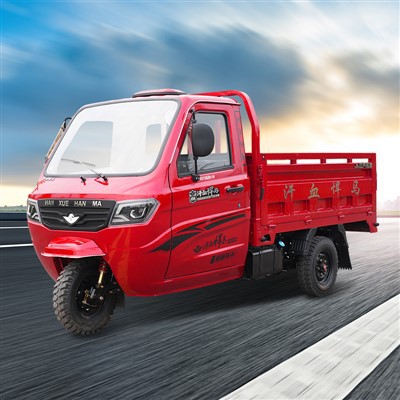
If you’re looking to upgrade your fleet, launch a new shuttle service, or test electric transit in your community, we can walk you through the different models, their turning radii, and which one fits your needs. We’ve worked with small business owners, city transit departments, and even tour companies all over the world, so we know how to match the right tricycle to your specific routes. Get in touch with us to talk through your use case, test the models if you’re local, and get a custom quote that works for your budget.
Electric Cargo Tricycle References
- International Organization for Standardization. ISO 15195:2019, Road vehicles — Turn test procedures for two, three and four-wheeled vehicles. Geneva, Switzerland: ISO, 2019.
- National Highway Traffic Safety Administration. “Passenger Vehicle Turning Radius Comparison.” NHTSA Vehicle Safety Reports, 2022.
- Global Electric Transit Association. “Electric Three-Wheeled Passenger Vehicles: Performance Metrics for Urban and Rural Use.” GETA Industry Whitepaper, 2021.
- Tricycle Engineering and Design Journal. “Balancing Maneuverability and Stability in Three-Wheeled Electric Vehicles,” Vol. 12, No. 3, 2020, pp. 45-52.
Chongqing Hanxuehanma Industry Co., Ltd.
As one of the most professional electric passenger tricycle manufacturers and suppliers in China, we offer a wide range of products with superior quality. Please feel free to wholesale advanced electric passenger tricycle made in China here from our factory. Customized orders are welcome.
Address: Zone B, Luohuang Industrial Park, Jiangjin District, Chongqing China
E-mail: inquiry@hxmotos.com
WebSite: https://www.hxmotos.com/
