Hey there, I’m Jake, and I’ve been selling centrifugal pumps for over a decade now—whether it’s for a tiny local brewery moving wort or a big chemical plant shifting bulk fluids, the number one question I get from new buyers is almost always the same: “How much power is this thing actually gonna use?” It’s not just a random number, y’know—skip figuring this out and you’re either blowing your energy budget outta the water (pun very intended) or buying a pump that’s too weak to do the job right. Let’s break this down like I explain it to my guys on the service truck, no stuffy engineering jargon that makes your eyes glaze over. Centrifugal Pump
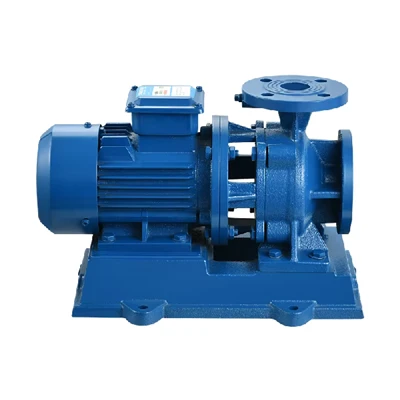
First, let’s get one thing straight: a centrifugal pump’s power use isn’t just a guess. It’s tied to how hard the pump’s working, and every variable matters. I see folks skip this all the time—they look at a pump’s listed “max power” on a spec sheet and think that’s what they’ll pay every month. Nope, that’s the peak, the absolute limit it can hit if you’re cranking it to full tilt for something way bigger than it’s built for. The real power you’re actually using? Let’s call that “operational power,” and it’s the sweet spot we need to nail.
Let’s start with the basics that drive that number. Think of a pump as a way to move fluid from Point A to Point B. To do that, it needs to overcome two big hurdles: how much fluid you’re moving (that’s flow rate, usually measured in gallons per minute, or GPM, if you’re in the US—liters per second overseas, but same logic) and how high you’re lifting it (or how much pressure it’s pushing against, that’s total dynamic head, or TDH). If you’re moving water 50 GPM up 20 feet, that’s a totally different workload than 500 GPM up 100 feet, so their power bills will be night and day.
Then there’s efficiency, and this is where a lot of new customers slip up. No pump is 100% efficient—energy’s always lost to friction in the impeller, the pump casing, even the bearings. A good centrifugal pump might be 80-90% efficient at its “best efficiency point” (BEP)—that’s the sweet spot where it’s running at its optimal load. Run it too low or too high, and efficiency drops fast, which means more wasted power. I once had a farmer come to me because his old pump was costing him $300 extra a month—turns out he was running it at 30% of its BEP, so it was throwing away nearly half the energy it used. We swapped him for a pump sized just right, and his bill dropped immediately.
Now, let’s get to the actual formula—don’t panic, it’s way simpler than high school physics. The brake horsepower (BHP) is the power the pump needs from its motor, right? And the hydraulic horsepower (WHP) is the actual work it’s doing moving fluid. The formula looks like this: BHP = (Flow Rate x Total Dynamic Head x Specific Gravity) / (3960 x Efficiency). Wait, specific gravity? That’s just how heavy your fluid is—water is 1, so oil might be 0.9, acid might be 1.2. If you’re pumping something thicker than water, it takes more power, duh—like stirring honey vs. water, same idea. 3960 is just a magic number that converts feet, GPM, and pounds into horsepower for US units; metric folks use a slightly different number, same principle.
Let me throw out a real example from a local grocery store I worked with last year. They needed a pump for their deli’s rinse water system: 120 GPM, 30 ft of TDH, pumping water (specific gravity 1), and a pump with 82% efficiency. Plugging in the numbers: (120 x 30 x 1) / (3960 x 0.82) = 3600 / 3247.2 ≈ 1.11 BHP. So that pump’s motor would be a 1.5 HP unit, right? Wait a second—why not a 1.11 HP motor? Because motors only come in standard sizes, and you always size up a little to avoid tripping breakers or overworking the motor. That 1.5 HP is what you see on the motor tag, but the actual power they use is ~1.1 HP at normal operation. That’s a big difference from guessing, right?
Here’s where I see people waste money: oversizing pumps. A lot of engineers or old school guys will buy a pump that can handle twice the needed flow “just in case,” but that kills efficiency. If you’re pumping half the flow, your efficiency drops to 50% or lower, and power use is almost half of the peak, but not quite—so you’re still paying extra for wasted energy. I tell every customer: “Size it for your current needs, with a little room for growth, not for a job you don’t have right now.” If you think you’ll need more flow in two years, we can set up a VFD (variable frequency drive) to adjust the motor speed later, that’s way cheaper than buying an oversize pump upfront.
VFDs are another game-changer when it comes to power use. If you’ve got a pump running full speed all the time, even when you only need half the flow, a VFD can slow it down to match your actual needs, and power use drops like a rock—studies say for every 10% speed reduction, power drops ~20%. I had a wastewater plant client that was spending $1,200 a month on power for a pump running at full speed, but they only needed 60% of that flow. We added a VFD, and their power bill for that pump dropped to $500 a month. That’s $8,400 a year just for a $1,500 VFD—easy call.
Wait, but what about different types of centrifugal pumps? A end-suction pump for a lawn sprinkler is way different than a multi-stage pump for high-pressure cleaning, right? The power scale matches their job. End-suction pumps are usually 0.5 HP to 50 HP for small jobs, multi-stage can go up to thousands of HP for things like pipeline pumping. I always ask customers to send me their exact specs, not just “I need a pump for water”—that’s how I avoid them buying something that’s gonna run their power bill through the roof.
Another thing to keep in mind: power draw isn’t constant. It changes as the pump ages, too. Bearings wear, impellers get corroded or clogged with sediment, and that makes the pump work harder. A pump that was running at 80% efficiency when new might drop to 60% after a few years, so power use goes up 30% or more without you noticing. That’s why regular maintenance isn’t just about preventing breakdowns—it’s about keeping power bills low. I tell my customers to check their power usage every quarter; if it’s spiking, it’s probably time to service the pump.
Let’s also clear up a common myth: “High horsepower means a better pump.” No way. A cheap pump with a 5 HP motor might be 60% efficient, while a quality pump from a reputable brand with a 5 HP motor might be 85% efficient. That means the quality pump does 25% more work for the same power—so lower power bills, longer life, fewer repairs. I’ve seen customers buy the cheap “guy on Amazon” pump that’s listed as 5 HP, turns out it’s only a 3.5 HP actual output, and it burns out in a year. The extra $200 they saved upfront? They spent $1,200 on a new pump and higher power bills, total loss.
So putting it all together, how do you figure out your centrifugal pump’s power consumption? Step 1: Get your exact flow rate (GPM or L/s) and total dynamic head (TDH—don’t forget to add friction from pipes, valves, and fittings, that’s a big one people miss). Step 2: Note the specific gravity of your fluid. Step 3: Account for efficiency, and know that the motor’s rated HP is the actual peak you’ll see. Step 4: If you need to adjust flow, a VFD can cut power use drastically.
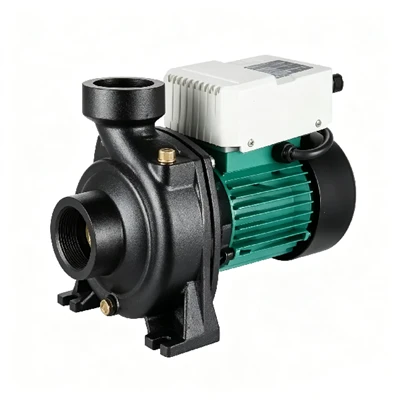
At the end of the day, I’ve sold pumps to plumbers, brewery owners, mine operators, everyone in between, and the ones who save the most money on power are the ones who do their homework instead of grabbing the first spec sheet they see. If you’re in the market for a centrifugal pump and you don’t wanna get stuck with a power bill that makes you wince, just reach out. We’ll sit down, go over your exact needs, run the numbers, and make sure you get a pump that’s sized right, efficient, and keeps your power costs low for years. No guesswork, no jargon, no pushy sales tactics—just straight talk, which is how I’ve stayed in this business for so long.
Plastic Solar Surface Pump References
Karassik, I. J., Krutzsch, W. C., Fraser, W. H., & Messina, J. P. (2007). Pump Handbook (4th ed.). McGraw-Hill.
Hydraulic Institute. (2020). Energy Efficiency Guide for Centrifugal Pumps. Hydraulic Institute.
Bennett, J. M., & Rahe, A. (2018). Variable Frequency Drives: Reducing Pump Energy Consumption. Pump Industry Analysis.
Longbiao Pump Industry Co., Ltd.
We are one of the most professional pipeline pump manufacturers and suppliers in China, featured by quality products and low price. Please rest assured to buy discount pipeline pump for sale here from our factory. We also accept customized orders.
Address: Unit 101, Building 11, Pan’ao Entrepreneurship Park, Daxi Town, Wenling City, Taizhou City, Zhejiang Province, P.R. China
E-mail: 1653746797@qq.com
WebSite: https://www.cnlongbiao.com/
