If you’ve ever organized a local charity fun run, a community festival 5K, or a small local sports tournament, chances are you’ve heard this question before from teams, participants, or even fellow event organizers: “What do I actually need to do to earn an Event Medal?” As someone who’s been supplying custom Event Medals for over a decade, I’ve fielded this query hundreds of times, and the answer is rarely as simple as “finish the race” or “show up.” Over the years, I’ve worked with everything from 50-person neighborhood bike rides to 10,000-participant regional triathlons, and I’ve learned that the minimum performance required for an Event Medal balances three key things: the type of event, its core purpose, and the expectations of its participants. Most importantly, it’s never about punishing people— it’s about celebrating effort, regardless of skill level. Event Medals
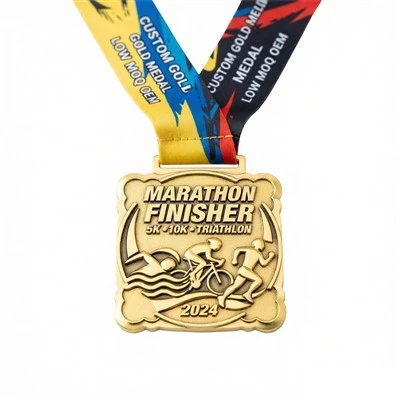
First, let’s break down the two biggest categories of events that most organizers reach out to me for: recreational community events and competitive organized events. The minimum performance required for each is drastically different, and that’s not a mistake. Recreational events are the backbone of local event medals; think of a youth soccer tournament for 8-year-olds, a charity walk for mental health, or a family-friendly obstacle course race. For these, the minimum performance is almost always participation. Wait, let’s clarify that: not just “showing up”— it’s completing the full event course or activity, within a clear, fair timeframe that allows for all ability levels. I learned this early in my career when a small town in Ohio booked me for their annual pumpkin 5K, which drew runners of all ages, from toddlers in strollers to retirees with walking sticks. They initially asked if they could put a 25-minute cut-off, but after a trial run with a small group, we realized that cut-off would exclude half the participants, many of whom were doing it for the first time to fundraise for the local food bank. We adjusted it to a 90-minute cut-off— generous, but clear— and that year, every single person who crossed the finish line (including a woman in her 70s who walked the entire way with a cane) got a medal. The feedback was incredible; people hung those medals on their walls for years, not just because they finished, but because it felt like their effort was worth celebrating. That’s the sweet spot for recreational events: minimum performance = complete the full event, no arbitrary time barrier, and a clear, inclusive rule set that’s communicated upfront so no one is caught off guard.
Now, for competitive events— regional track meets, adult road races with prize money, junior elite soccer tournaments— the bar is higher, and the minimum performance isn’t just participation. But even here, it’s not about being the fastest; it’s about meeting a fair, pre-established standard that keeps the event’s competitive integrity intact, without alienating casual participants. For example, I worked with a local running club that hosts a 10-mile race every spring, with three medal tiers: finisher medals for anyone who crosses the line, age-group medals for top 3 in each category, and performance medals for runners who finish under a set time. That set time is their minimum performance for the performance medal, and this year, that standard was 1 hour 15 minutes for men and 1 hour 25 minutes for women. It’s a challenging time, but it’s not impossible for experienced runners— and it gives their most dedicated participants something extra to strive for, without making the finisher medal feel less valuable. What I always emphasize to organizers of competitive events is that these minimum standards need to be set before registration opens, not after the race is over. Changing the bar halfway is the fastest way to erode trust with participants. I once saw a small half-marathon try to adjust their performance time to award medals to more people after only 200 runners finished under the original cut-off, and it led to dozens of angry social media posts and a 30% drop in registration the next year. Fairness is non-negotiable here.
Another factor that shapes the minimum performance requirement is the event’s core mission. If the event is a fundraiser for a good cause, the minimum performance isn’t just finishing—it’s often meeting a fundraising minimum, too. That’s a model I’ve seen work really well for charity walks and runs. For example, a cancer walk I supply medals for requires participants to raise at least $100 to earn their medal, and that’s clearly communicated on their registration page. The minimum physical performance is still completing the 3-mile course, but the fundraising add-on makes the medal feel more meaningful, because it’s not just about running— it’s about contributing to a larger goal. I’ve had people tell me they trained for months to raise enough money, not just to finish, and that medal is a reminder of both their effort and the charity they supported. Of course, this model isn’t for every event; if it’s a casual community picnic with a 1-mile fun run, adding a fundraising minimum might feel exclusionary. That’s why the mission has to align with the rule set. For a youth sports tournament, for example, the minimum performance might be showing up to every game, participating for at least half the time, and not getting a red card or ejection. That teaches kids teamwork and effort, not just winning, and the medal becomes a reward for good sportsmanship as much as participation.
Now, let’s talk about common misconceptions I hear all the time from organizers and participants alike. The first is that “minimum performance means being the best.” That couldn’t be further from the truth. Most of the medals I ship every year are finisher medals, not winner medals. A finisher medal is for the person who finishes last in a race, the toddler who crosses the line holding their parent’s hand, the team that loses every game in a soccer tournament but showed up ready to play. That’s why I work with organizers to design medals that feel special, not just like a generic afterthought— whether it’s a fun run medal shaped like a pumpkin, a charity walk medal with a custom engraving of the organization’s name, or a youth tournament medal that says “Most Valuable Teammate” instead of “Champion.” When a medal feels personal, the minimum performance required to earn it becomes something people care about, not just a checkbox. Another misconception is that minimum performance is one-size-fits-all. I’ve had an organizer ask for “a standard minimum” for every event, but that’s never worked. A 5K for seniors needs a different bar than a high school cross country meet, and a 1-mile fun run for kids needs a different bar than a sprint triathlon for adults. The best rule of thumb, I’ve found, is to base the minimum performance on the event’s audience and purpose, not what similar events are doing.
Let’s also get into the details of how we (as Event Medal suppliers) work with organizers to set these minimums, because that’s a part of the process that many people don’t see. When an organizer reaches out to me for a quote, I don’t just send a price list— I ask them a series of questions: What type of event is it? Who is your target participant? What’s your top priority for the medals? Is it to celebrate effort, recognize winners, or support your charity? For example, if an event is a youth basketball tournament, I’ll ask if they want medals for all teams, or just the top three. If it’s all teams, we’ll work with them to define the minimum performance required for each medal— like attending all games, participating for a set number of minutes, or demonstrating good sportsmanship. I also emphasize transparency, which is key for making the minimums feel fair. Every organizer I work with knows that I’ll help them print the minimum performance rule right on the medal’s ribbon, or add it to their event flyer and website, so participants know exactly what they need to do before they sign up. No one likes showing up to an event and realizing they don’t qualify for a medal because they misunderstood the rules, and that’s a mistake I help organizers avoid.
I want to share a story that really stuck with me, because it sums up what minimum performance for Event Medals is all about. A few years ago, I worked with a small community in rural Pennsylvania that hosts an annual “Winter Dash” — a 2-mile run/walk in January, with snow on the ground and temperatures often below freezing. This event is for local residents only, most of whom are farmers, teachers, or retirees who don’t do formal races. The first year they ran it, they only gave medals to the top three runners, and most of the participants left feeling like it wasn’t for them. The next year, they reached out to me to rework the medals, and we decided to give every person who finished the race a medal, no time limit, no minimum speed. The only rule was that they had to cross the finish line under their own power— no being carried, no riding a snowmobile. That year, there were 127 participants, and only 3 didn’t finish (they had to turn back because of a sudden snowstorm). The next year, they had 212 participants, and this year, even with a similar snowstorm, only 5 people didn’t finish. The organizer told me that year, a 62-year-old farmer named Joe who walks with a knee replacement finished the race in 1 hour 47 minutes, and he posted a photo of his medal on the local Facebook page saying “This is the hardest thing I’ve ever done, and it’s better than any blue ribbon I ever won at the county fair.” That’s the point of Event Medals: the minimum performance is whatever makes the participant feel proud of their effort, not whatever makes the event look more competitive.
Of course, there are times when a higher minimum performance is appropriate. If you’re a professional sports league or a national-level race, the bar is going to be much higher. But even for competitive events, that high bar is reserved for special medals, like championship medals or elite performance medals, not the standard finisher medal. For example, I supply medals for a national adult soccer tournament, where the championship medals are for the top two teams, and all participating teams get a medal that just says “2024 National Tournament Participant.” The minimum performance for the championship medal is winning three games in a weekend, but the minimum for the participant medal is showing up to all three games, ready to play. That balance works because it recognizes both the effort of every team and the achievement of the winners.
Another thing to consider when setting minimum performance is inclusion for people with disabilities. Over the years, I’ve worked with several events that adapt their medals for participants with different abilities. For example, a wheelchair race might have a different course or time limit than a running race, and the minimum performance for a medal is completing the adapted course, not the same as able-bodied participants. I make it a point to ask every organizer if their minimum performance is inclusive of all abilities, because there’s nothing more disheartening than a participant with a disability being excluded from a medal they worked hard for. A few years ago, a middle school track meet reached out to me to order medals for their special education division, and they had set the minimum performance for a medal as completing one lap around the track, at whatever speed the participant could manage. That small adjustment made that division’s medals the most meaningful ones of the day, and I still hear from the special education teacher who told me that many of those students still wear their medals to school every week.
At the end of the day, when someone asks “What is the minimum performance required to get Event Medals?”, the answer is simple, but it’s not one-size-fits-all. It’s about aligning with your event’s purpose, being fair and transparent, and celebrating effort regardless of skill level. For most community and recreational events, the minimum is completing the full event within a clear, inclusive timeframe. For competitive events, it might be meeting a pre-set performance standard for elite medals, or just showing up and putting in the work for finisher medals. For charity events, it might include meeting a fundraising minimum to tie the medal to a larger mission. The best Event Medals, and the best minimum performance rules, make participants feel seen and proud, not just like another number on a race roster.

If you’re planning an event and want to make sure your medals and their performance rules are fair, meaningful, and tailored to your audience, feel free to reach out to us to discuss your needs. We’ve worked with events of all sizes, from small local fun runs to large national tournaments, and we’re here to help you create medals that celebrate every participant’s effort, no matter what the minimum performance looks like for your event.
Martial Arts Medals References:
- International Association of Event Organizers. "Best Practices for Event Medals and Participant Recognition." 2023.
- National Recreation and Park Association. "Inclusive Event Guidelines for Community Sports and Fitness Events." 2022.
- Running USA. "Finisher Medals: Balancing Competition and Access in Road Racing." 2021.
Global Art Gifts Co., Ltd.
Global Art Gifts Co., Ltd. is one of the most professional event medals manufacturers and suppliers in China. We are committed to providing high quality customized products with competitive price. Welcome to buy bulk durable event medals in stock here from our factory. Also, pricelist is available.
Address: Hushan Tech Park, Shiwan, 516127 Huizhou China
E-mail: nicole@globalartgifts.com
WebSite: https://www.globalartgift.com/
