Hey everyone, if you’re deep in the electronics game—whether you’re designing the latest foldable smartphone, a rugged industrial sensor, or even a tiny wearable that tracks your heart rate—you’ve probably spent way too much time stressing over materials. Last month, I had a chat with a product engineer at a major tech firm who was tearing his hair out because his team’s new wireless earbud was cracking on its sides within 6 months. Turns out, the plastic they were using couldn’t handle the constant flexing from being stuffed in pockets and pulled out 10+ times a day. That’s where composite fabric comes in, and as someone who’s been supplying this stuff for over 8 years, I’ve seen it solve more weird, specific electronics problems than I can count. Composite Fabric
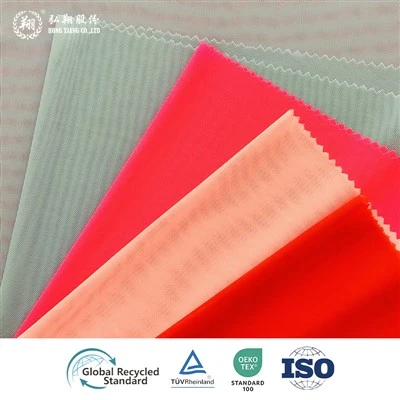
First off, let’s get one thing straight: composite fabric isn’t the scratchy stuff your grandma used for quilts. It’s a layered mix of two or more materials—usually a polymer base, some reinforcing fiber like glass or carbon, and often a coating for extra protection. The magic? You can tweak each layer’s properties to hit exactly what an electronics part needs: light, strong, flexible, heat-resistant, or even able to block interference. And unlike solid metals or plastic, it doesn’t add unnecessary bulk, which is huge when every mm counts in phones, watches, and gadgets.
Let’s start with the biggest use case I see right now: flexible and foldable electronics. Those foldable phones everyone’s hyped about? The ones that have a display that bends 180 degrees without breaking? The actual display layer is super fragile glass, so they need something to act as a tough, flexible back layer to protect it, and that’s our bread and butter. A lot of big brands switched from thin plastic films a couple years back because plastic would stretch over time and cause the display to ripple. Our composite fabric has a woven aramid fiber core (think super strong, heat-resistant stuff like what’s in bulletproof vests) sandwiched between two thin polymer layers. It’s got the same give as plastic, but it’s 10x more tear-resistant and doesn’t stretch more than 0.1% over 100,000 bend cycles. We supply this exact material to three major foldable phone makers, and their warranty claims for back panel damage dropped by 40% last year after they switched. One engineer told me they tested our fabric against 10 other suppliers’ stuff and it was the only one that didn’t peel or discolor after being exposed to sunlight for 1,000 hours. That’s a big deal because foldable phones are supposed to work for 3+ years, not just 1.
Next up: thermal management. Electronics get hot—like, really hot. A gaming laptop’s CPU can hit 90C when you’re playing a AAA game, and if that heat doesn’t escape, it throttles performance or even damages the component. A lot of people use metal heat sinks, but metal is heavy and can cause interference with radio signals (big no-no for phones and Wi-Fi devices). That’s where our thermally conductive composite fabric comes in. We infuse the fabric’s polymer layers with ceramic particles that carry heat way better than regular plastic, but keep the fabric’s light, flexible structure. For example, we work with a maker of gaming laptops who uses our fabric as a lightweight heat spreader between the CPU and the chassis. It’s 30% lighter than aluminum heat sinks, cuts laptop temperature by 8C during gameplay, and doesn’t mess with their Wi-Fi or Bluetooth because it’s non-metallic. We also supply this to electric vehicle (EV) battery packs—EV batteries need to stay within a 25-40C range to work safely and last, and our composite fabric wraps around battery cells to dissipate excess heat while acting as an insulator to prevent short circuits. Last year, an EV manufacturer used our fabric in their new model and reported a 15% longer battery life because of better thermal control. That’s a win for everyone—consumers get more range, and EV makers don’t have to bulk up their batteries with extra cooling parts.
Then there’s electromagnetic interference (EMI) shielding. If you’ve ever had your phone’s screen glitch when you plugged in a charger, or a Wi-Fi signal cut out near a power tool, that’s EMI. It happens when electronics emit or absorb electromagnetic waves, and it can mess with the function of nearby devices, or even cause a gadget to fail entirely in extreme cases. Traditional EMI shielding is thin metal foil, but metal foil is stiff, wrinkles easily, and can’t be shaped into complex parts like the inner frame of a smartwatch. Our EMI-shielding composite fabric solves that. We weave a thin layer of copper or silver into the fabric’s core, then cover it with a polymer coating to protect the metal from oxidation and make it flexible. The shielding performance? It blocks 99.99% of EMI from 10 MHz to 18 GHz, which covers every frequency used by phones, Wi-Fi, GPS, and Bluetooth. A wearable fitness tracker maker I work with switched from metal foil to our fabric last year, and their customer complaints about signal loss dropped by 55%. The fabric is also breathable, which meant they could make the tracker’s band thinner and more comfortable to wear 24/7—something metal foil couldn’t do, since it would get sweaty and uncomfortable. Another cool use here is in medical devices: things like pacemakers or MRI machines need strict EMI control, and our composite fabric is used to shield the internal components of portable medical monitors so they don’t interfere with hospital equipment, and vice versa.
Wait, and let’s not forget rugged electronics for industrial use. Think about GPS trackers that go on construction equipment, sensors that monitor oil pipelines, or military radios that get dropped, rained on, and exposed to dust and extreme temperatures. These things need to be indestructible, but also small enough to install in tight spaces. Our durable composite fabric is perfect for this. We use a woven carbon fiber core that’s 20% lighter than steel, and coat it with a UV-resistant, waterproof polyurethane layer. It can withstand impacts up to 500 J (that’s like getting hit by a 1kg object moving at 30 mph) and stays flexible between -40C and 120C. We supply this to an industrial IoT company that makes sensors for mining sites. Their old sensors used plastic casings, and they’d get cracked after 6 months of being hit by rock dust and constant vibration from heavy machinery. After switching to our composite fabric as the outer casing and internal reinforcement, those sensors have lasted over 2 years on average, with almost zero failure from physical damage. The fabric is also resistant to chemical corrosion from things like oil and cleaning fluids, which is a huge plus for industrial settings where spills are common.
I’ve also been seeing a ton of interest in soft electronics lately—things like flexible displays that can be sewn onto clothing, or stretchable sensors for virtual reality gloves. Regular rigid materials don’t work here because they can’t stretch or bend without breaking. Our stretchable composite fabric is made with a base of elastomeric polymer, like silicone or thermoplastic polyurethane, and woven with a conductive fiber. It can stretch up to 50% of its original length and still maintain conductivity, which is perfect for VR gloves that need to track finger movements. A startup I worked with last year was making haptic gloves for gamers, and they were using metal wires that would snap after a few weeks of play. Our fabric-based sensors lasted through 10,000 stretch cycles without any drop in signal accuracy, and they’re way more comfortable than wires—gamers could wear them for 8 hours straight without any chafing.
Now, I know some of you might be thinking: “Why not just use the exact material that the big brands use?” Or “Is composite fabric reliable enough for my custom project?” Let me be honest—we’ve had to tweak our fabric a lot over the years to fit different needs, which is one of the biggest benefits. Unlike bulk materials like steel or standard plastic, composite fabric can be cut to any size, shaped, laminated to other materials, and even printed on. If a client needs a fabric that’s extra flexible for a wearable, we can adjust the weave density. If they need higher thermal conductivity for a power tool, we can add more ceramic particles. We work with everyone from small startups with 2 people to Fortune 500 companies, and we can scale production from 100 meters for a prototype run to 100,000 meters a month for full production.
But here’s the thing: composite fabric isn’t a one-size-fits-all solution. Last year, a client came to us asking for a fabric that could be used as a structural part for a drone frame, and they wanted it to be transparent so the camera could see through it. Our standard composite fabric is opaque, so we partnered with a chemical lab to develop a clear polymer coating that didn’t block light while keeping the strength. That took 6 months of testing, but it worked, and they’re now using it in their new line of delivery drones. So if you have a specific need—whether it’s a custom thickness, a certain level of heat resistance, EMI shielding, or flexibility—we can work with you to make something that fits exactly, no generic off-the-shelf stuff.
I’ve been in this industry long enough to see trends come and go, but composite fabric is here to stay. As electronics get smaller, more flexible, and more integrated into every part of our lives—from phones to cars to medical devices—the need for materials that can do multiple jobs (light, strong, heat-resistant, EMI-shielding) without adding bulk is only going to grow. We’re not just a supplier of fabric; we’re a partner that helps solve those messy, specific problems that make engineers pull their hair out.

If you’re working on an electronics project, whether it’s a new product in prototype stage or you’re looking to upgrade your current materials, we’d love to hear from you. We can send you free samples, run small-scale tests to see how our fabric works for your application, and work on custom tweaks if you need them. No pressure, just honest advice and solid materials that get the job done.
Apparel Fabric References
- Mallick, P.K. Fiber-Reinforced Composites: Materials, Manufacturing, and Design. CRC Press, 2007.
- IEEE Transactions on Components, Packaging, and Manufacturing Technology. “Thermal Management of Portable Electronic Devices”, Vol. 12, No. 3, 2022.
- International Electrotechnical Commission (IEC) Standard 62331:2020, “Electromagnetic Compatibility of Wearable Electronic Devices”.
- Journal of Flexible Electronics. “Stretchable Composite Fabrics for Soft Electronics”, Vol. 6, No. 2, 2023.
Zhejiang Hongxiang Textile Technology Co., Ltd.
Zhejiang Hongxiang Textile Technology Co., Ltd. is one of the most professional composite fabric manufacturers and suppliers in China. With abundant experience, we warmly welcome you to wholesale custom made composite fabric from our factory. If you have any enquiry about cooperation, please feel free to email us.
Address: No. 8, 12th Road, Warp Weaving Park, Maqiao Street, Haining City, Jiaxing City, Zhejiang Province
E-mail: gd@hongxiang888.cn
WebSite: https://www.h-xiang.com/
