If you’ve ever had to spec out material handling gear for a warehouse, DC, or small manufacturing shop, you’ve probably stared down the same question: electric stackers vs. forklifts. I’ve been selling electric stackers for over eight years now, and no two days go by where someone doesn’t ask me which is “cheaper to own long-term.” The answer isn’t as black and white as you might think—so let’s break this down like we’re chatting over a coffee, no stuffy spreadsheets or confusing jargon. Electric Stackers
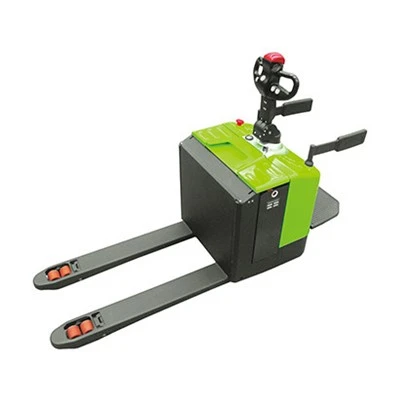
First off, let’s get the basics out of the way so we’re on the same page. A standard forklift (the most common is a sit-down counterbalance model) is built for heavy lifting—think pallets of raw steel, 10,000 lbs of produce, or skids stacked two stories high. Electric forklifts run on big lead-acid batteries that take 8 hours to charge, plus another 8 to cool, and they’re usually bulkier, more expensive, and need specialized maintenance to keep running. An electric stacker? It’s sleeker, built for lighter to mid-weight loads—usually 2,000 to 6,000 lbs— and designed specifically for moving pallets short distances, often in narrow aisles where a forklift would get stuck. If you’re doing long hauls across a 100k sq ft warehouse or lifting 15 feet straight up, a forklift might make sense. But if you’re stacking pallets 10 feet high, moving them between storage racks and a loading dock, or working in tight spaces? 9 times out of 10, a stacker is the better call for your wallet.
Let’s start with the big number everyone looks at first: upfront cost. This is where a lot of new buyers get sticker shock from forklifts, because entry-level electric forklifts don’t come cheap. A basic 3,000 lb capacity sit-down electric forklift will set you back anywhere from $25,000 to $40,000, depending on brand, battery size, and any extra attachments you might need (like side shifters or fork positioners). If you want a model that can lift 5,000 lbs, you’re looking at $35,000 to $55,000 easy. Now, what about an electric stacker? Our most popular model for small to mid-sized operations costs between $8,000 and $15,000 for a base unit, with even high-capacity models topping out around $20,000 max. That’s a huge gap—we’re talking $10,000 to $40,000 less upfront, which is no small change for a small business or even a mid-sized warehouse operating on thin margins.
But wait, that’s just the initial buy-in. The real cost starts adding up after you drive the unit off the lot, and this is where electric stackers absolutely crush forklifts. Let’s talk about operating costs first, starting with energy. Forklifts eat electricity like candy, but not just because their batteries are big. Remember how I said forklift batteries take 8 hours to charge and need 8 hours to cool? That means if you run two shifts, you need two batteries—so you’re buying two $3,000 to $5,000 batteries just to keep the forklift running all day. Plus, you have to charge them in a special area, because the charging process gives off hydrogen gas that’s flammable. That means you need a dedicated charging bay with ventilation, maybe even a gas detector, and it takes up warehouse space you could be using for storage or picking.
Electric stackers, on the other hand? Most run on smaller lithium-ion batteries these days (we stopped selling lead-acid stackers 5 years ago for a reason) that charge in 1 to 2 hours, and a full charge will get you through an entire single shift, no second battery needed. They don’t give off any dangerous fumes, so you can charge them right in the corner of your warehouse, no special setup required. A quick charge over lunch? You’re good for the rest of the day. On average, our customers tell us their stackers cost between $100 and $300 a month in electricity, while forklift owners I work with are paying $200 to $500 a month—more than double, for a unit that’s way more expensive to buy.
Next up, maintenance. This is where the difference gets even starker. Forklifts are complex machines. They have steering systems, transmission parts, brakes, and that giant battery that needs regular watering, equalizing (a special charging process to keep the battery healthy), and replacement every 3 to 5 years. The annual maintenance for a forklift—oil changes, brake adjustments, battery service, general tune-ups—usually runs between $1,500 and $3,000 a year. And if you run it hard, that battery replacement every 4 years is another $4,000 to $6,000. Our stackers? They’re way simpler. No transmission (most are electric, so they have just a motor and a hydraulic pump), no lead-acid battery to maintain. Annual maintenance is usually less than $500 a year, and the lithium-ion battery on our stackers is rated to last 10 years or more, with almost no degradation in capacity over that time. I had a customer in the food distribution business use our lithium-ion stacker for 7 years straight, running 12 hour shifts 5 days a week, and they only had to replace the hydraulic filter once. Compare that to a forklift battery that’s dead after 5 years, and the math starts to look really lopsided for the forklift.
Wait, but what about when you factor in space? A lot of people forget that material handling equipment takes up space in the warehouse, and narrow aisles mean more storage space. Forklifts need wide aisles to turn—usually 10 to 12 feet for a standard sit-down model—because their turning radius is big. That means you have to leave 12 feet of empty space between your storage racks, which could be used for more pallets, more pick stations, or just less wasted space. Electric stackers? Their compact design means they need aisles as narrow as 6 feet, sometimes even 5 feet for the reach stacker models we sell. Let’s do a quick math check here: if you have a 10,000 sq ft warehouse and you’re using 12 ft aisles vs. 6 ft aisles, that’s an extra 5,000 sq ft of storage space you gain with stackers. If your warehouse is making $10 a sq ft in storage revenue (common for third-party logistics or food warehouses), that’s $50,000 a year in extra income you’re missing out on with forklifts. That’s a huge hidden cost that almost no one factors into their initial comparison.
But hold on—this isn’t to say forklifts are never worth it. If you’re lifting 10,000 lb pallets, or stacking 20 feet high for bulk storage, a forklift is the only tool for the job. And if you’re running a 24/7 operation where you need to move huge loads across a massive facility 24 hours a day, a forklift might be a better fit. But for 70% of the businesses I work with—small manufacturing shops, e-commerce warehouses, grocery distribution centers, construction sites that just need to move pallets around a jobsite—they don’t need that kind of power. I’ve had a lot of customers come to me after buying a forklift and realize they’re only using 40% of its capacity 90% of the time. They’re paying for a 10,000 lb truck when they only need to move 3,000 lb pallets, and all that extra cost is just dead weight.
Another thing a lot of buyers miss is downtime. Forklifts are prone to breakdowns—especially older lead-acid models. If your forklift battery dies mid-shift, you’re stuck waiting 8 hours for it to charge, and that means your entire operation slows down. Stackers with lithium-ion batteries? If you run out of power mid-shift, you can plug it into a standard outlet for 15 minutes and get enough charge to get through the rest of the day. No downtime, no lost productivity, which saves you money in labor costs alone. If your warehouse has 5 pickers running 8 hour shifts, and a forklift breakdown means 2 of them can’t work for 2 hours, that’s 4 man-hours wasted—at $25 an hour, that’s $100 a pop. Multiply that a few times a month, and it adds up fast.
Let’s do a real-world example, because numbers without context don’t mean anything. Let’s say you’re a small e-commerce warehouse, 50,000 sq ft, running two 8 hour shifts a day, 5 days a week, moving 3,000 lb pallets, stacking them 10 feet high. You’re trying to decide between a 3,000 lb electric forklift ($30,000 upfront) and our 3,500 lb electric stacker ($12,000 upfront). Let’s calculate the total cost over 5 years, which is the average lifespan of a forklift, vs. 10 years for a stacker:
Upfront cost: Forklift $30k, Stacker $12k. Difference so far: $18k for the stacker.
Energy cost over 5 years: Forklift $300/month x 60 months = $18k. Stacker $150/month x 120 months = $18k. Even here, the stacker matches, but it’s over twice as long.
Maintenance over 5 years: Forklift $2,000/year x 5 = $10k, plus one new battery at $5k = $15k. Stacker $500/year x 10 = $5k, no battery replacement. Difference: $10k for the stacker.
Space cost: The forklift needs 12 ft aisles, stacker needs 6 ft. That’s an extra 2,500 sq ft of storage space. At $10/sq ft/year, that’s $2,500/year x 5 years = $12,500 in extra revenue (or cost saved) for the forklift. Wait, no—wait, the stacker frees up that space, so that’s $12,500 you don’t have to pay in extra warehouse space, or can use for revenue. So that’s another $12,500 for the stacker.
Total over 5 years: Forklift $30k + $18k + $15k = $63k. Stacker $12k + $18k + $5k = $35k. Plus $12,500 in extra space savings. That’s $30,500 cheaper with the stacker over 5 years, and that’s a conservative number—if you run 2 shifts, or have higher labor costs for downtime, it’s even more.
Now, I’m not saying forklifts are bad. If you need to lift heavy loads or reach high, they’re necessary. But so many businesses overbuy forklifts just because they think it’s the “standard” material handling tool, when a stacker would do everything they need for half the cost, half the maintenance, and half the hassle. I’ve had a customer who ran a small grocery warehouse, bought a forklift on a recommendation, and was paying $500 a month just on energy and battery changes. After switching to three of our stackers, their monthly energy cost dropped to $450 total—for all three units. They saved over $10,000 in the first year alone. Another customer, a construction supplier, was paying $2,000 a month in forklift maintenance and downtime, and switched to our stackers for their on-site pallet moving, saving $18,000 a year and cutting their loading time by 30%.
The biggest mistake I see buyers make is looking only at the upfront cost, not the long-term hidden costs. Forklifts look cheaper on paper at first, but when you factor in energy, maintenance, battery replacement, downtime, and wasted warehouse space, they end up being way more expensive. Stackers are built for exactly the kind of material handling most small to mid-sized businesses do day-to-day, and their design is built to cut costs wherever it counts.
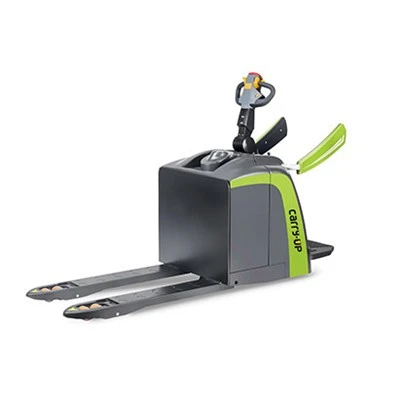
If you’re tired of overpaying for material handling gear, or you’re not sure which one is right for your operation, feel free to reach out to our team to talk through your needs. We don’t do pushy sales pitches—we just help you figure out what will save you the most money and work best for your team, no hidden fees or fine print.
Forklifts References:
Material Handling Industry Association. (2022). "Cost Comparison of Material Handling Equipment for Small Warehouses." MHIA Annual Equipment Report.
OSHA. (2021). "Guidelines for Electric Forklift and Stacker Operation and Maintenance." Occupational Safety and Health Administration Technical Brief.
Warehouse Education and Research Council. (2023). "Hidden Costs of Aisle Width in Warehouse Design." WERC Space Utilization Study.
Hangzhou Carry Equipment Co., Ltd.
Hangzhou Carry Equipment Co., Ltd. is one of the most professional electric stackers manufacturers and suppliers in China, also supports customized service. Please feel free to buy advanced electric stackers for sale here and get quotation from our factory. For price consultation, contact us.
Address: No.360 Tongxiang Rd., Yinzhou Economic Development Zone, Yinzhou Dist., Ningbo, China
E-mail: Sales@carryupmhe.com
WebSite: https://www.carrymhe.com/
