If you’re reading this, chances are you work in the dental industry—whether you’re a lab technician, a dentist selecting materials for implants, or someone like me who’s spent the last decade supplying dental titanium round discs. I’ve seen firsthand how small, avoidable issues can derail even the most carefully planned dental procedures, and oxidation on titanium discs is one of the biggest culprits. It’s not just a cosmetic problem; oxidized discs can compromise implant fit, reduce biocompatibility, and even lead to long-term complications for patients. Dental Titanium Round Discs
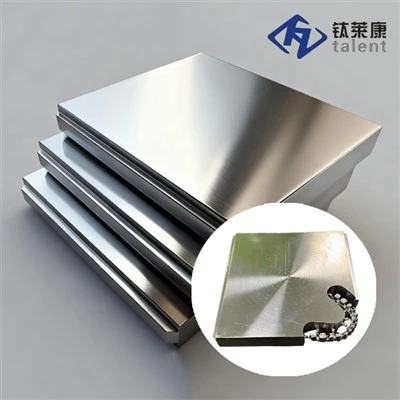
A few years back, we had a customer come to us frustrated. They’d ordered a batch of 50 titanium discs, and after a few weeks of storage, they noticed dull, grayish spots on the surfaces that should have been bright, uniform metallic silver. They’d tried machining them for custom abutments, but the oxidation made the edges rough, the fit inconsistent, and the final parts had a higher rejection rate than usual. That experience stuck with me because it highlighted something critical: oxidation isn’t just a problem for people who work with the discs—it’s a problem for every link in the dental supply chain. As a supplier, my job isn’t just to send high-quality discs; it’s to help our customers keep them that way, too.
First, let’s get clear on what dental titanium oxidation actually is. Titanium is known for its natural ability to form a thin, protective oxide layer (about 2 to 5 nanometers thick) when exposed to air. That layer is supposed to be a good thing—it’s what makes titanium biocompatible, so the body accepts implants easily. But when that layer grows too thick, or becomes uneven, that’s when the problem starts. Oxidation can happen at any point: during the manufacturing process, during storage, or even during machining. For dental use, we need that oxide layer to be consistent, smooth, and controlled—not too thick, not too porous.
So how do we prevent this? Over the years, we’ve worked with materials scientists, dental labs, and manufacturers to test and refine best practices, and I’m going to share what works. These aren’t just theoretical tips—they’re things we implement in our own facility, and things we walk our customers through when they place an order.
Let’s start at the source: manufacturing. The way we make dental titanium round discs has a huge impact on their resistance to oxidation later. We use Grade 5 titanium (Ti-6Al-4V) for most of our dental discs because it’s strong, biocompatible, and has excellent machining properties, but even Grade 5 can oxidize if the finishing process is off. One key step here is precision machining in a controlled environment. We use CNC machines with high-pressure, filtered coolants that minimize heat buildup during cutting. When titanium gets too hot, it reacts with oxygen in the air faster, forming a thicker, less uniform oxide layer. Our machines also have closed enclosures that reduce exposure to ambient oxygen during the final cuts. We also perform a final chemical passivation step—this isn’t just a random process. Passivation uses a nitric acid solution to remove any iron contaminants on the disc surface and encourage the formation of a smooth, tightly bound oxide layer. I’ve seen suppliers skip this step to save time, but that’s a mistake. Contaminants left on the surface act as sites where oxidation can start later, even in storage.
Next, storage. This is where a lot of customers go wrong, and it’s easy to fix. Titanium discs are often stored in open bins or on shelves exposed to humidity, dust, and fluctuating temperatures—especially if labs are short on space. But even small amounts of moisture in the air can accelerate oxidation. We recommend storing discs in sealed, airtight containers with a desiccant packet to absorb any moisture. Not just any container, either—we use polyethylene trays that are static-free and don’t leach chemicals that could react with the titanium. It’s also important to store the discs in a temperature-controlled area, away from direct sunlight and heat sources like ovens or heaters. We once had a customer who kept their discs on a shelf above a lab autoclave; the constant heat and steam caused oxidation on the edges of the discs within a month. After they moved the storage shelf, the problem stopped. Another tip: don’t stack discs directly on top of each other if they’re not individually wrapped. The friction between two titanium surfaces can disrupt the protective oxide layer, leaving spots where oxidation can set in.
Machining practices matter too, even after you’ve stored the discs correctly. When labs are machining their own custom parts from our discs, things like cutting speed, tool type, and coolant choice can affect oxidation. For example, using a dull cutting tool generates more heat, which again speeds up oxide formation. We recommend using carbide tools with sharp edges, and maintaining cutting speeds between 50 and 100 meters per minute for titanium. Also, avoid using coolants that have high levels of chlorine—chlorine can break down the protective oxide layer and cause localized oxidation, which is hard to fix. We’ve started including a free guide with every order that lists our recommended machining parameters, and we’ve seen a 30% drop in oxidation-related rejections from customers who follow those guidelines.
Another area we’ve explored is surface modification. While the natural oxide layer is good, some labs have experimented with a controlled, thicker oxide layer (around 100 nanometers) through a process called anodization. Anodization uses an electric current to grow the oxide layer uniformly, and it can also add color coding—something that’s helpful for identifying different disc sizes or grades in the lab. We offer anodized discs as an option, and customers say the uniform oxide layer makes them easier to machine and less prone to oxidation during long storage. That said, anodization is a process that needs to be done correctly; if the current is too high, the oxide layer can become brittle and flake off, which would be bad for dental implants. We work with a third-party anodization specialist to ensure every disc we send meets ADA (American Dental Association) standards for biocompatibility.
Contamination control is often overlooked, but it’s a big driver of oxidation. Titanium is a reactive metal, so even small amounts of other metals (like iron, copper, or aluminum) on the surface can cause galvanic corrosion, which speeds up oxide growth. In our facility, we have dedicated work areas for handling titanium discs—no other metalworking tools or parts are allowed near them. We use lint-free, polyester cloths to clean discs, and we never touch the surface with bare hands; skin oils contain salts that can cause contamination. We’ve started including a set of lint-free cloths and a small bottle of passivation solution with every bulk order, so customers have the tools to clean the discs if they’re exposed to contaminants during shipping or storage.
Now, let’s talk about what to do if oxidation does happen. It’s not always a lost cause. If you catch it early, a light sandblasting with aluminum oxide (though only with a very fine grit, like 100-micron) can remove the oxidized layer without damaging the disc surface. Then, a quick passivation step will re-form the protective oxide. But if the oxidation is deep or covers a large area, the disc might not be usable for dental applications, because the oxide layer can compromise the bond between the disc and the implant material. That’s why preventing it in the first place is so important.
As a supplier, I know that dental professionals have a lot on their plates—they don’t have time to troubleshoot material issues. That’s why we’re not just a vendor; we’re a partner. Over the past five years, we’ve hosted free webinars with dental lab technicians to talk about material handling, and we’ve created a library of videos on our website (wait, no—no links, per your note) with step-by-step guides for storage and machining. We also have a customer support team that’s specially trained to answer questions about titanium discs, and if a customer has an oxidation issue, we work with them to diagnose it—whether it’s a manufacturing error, a storage mistake, or a machining oversight.
I’ll be honest: oxidation on dental titanium round discs isn’t going to disappear overnight. But by working together—suppliers, labs, and dentists—we can cut down on it a lot. Too many patients have had to go back for implant revisions because of a small issue with the disc material, and that’s something we can prevent. Every disc we ship represents a patient who’s going to get a dental solution that lasts, and every step we take to reduce oxidation helps make that solution better.
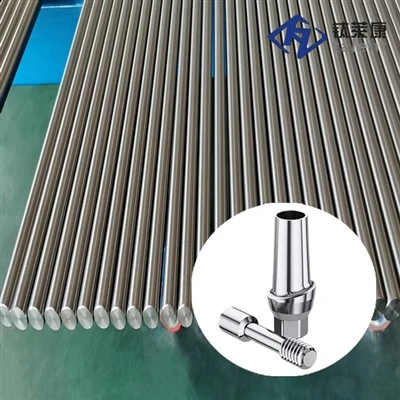
If you’re a lab technician, a dentist, or anyone who works with dental titanium round discs and wants to make sure you’re doing everything to prevent oxidation, we’re here to help. Our team has decades of experience in the dental materials industry, and we can answer your questions, walk you through best practices, or help you find the right discs for your needs. Whether you’re ordering a small batch for a one-off project or a large volume for a clinic, we can tailor our products to meet your requirements and ensure your discs stay in top condition from our facility to your workspace. Reach out to our team to discuss your needs, and let’s work together to prevent oxidation and support better dental outcomes for your patients.
Titanium Bars References:
- Brunette, D. M., Tengvall, P., Textor, M., & Thomsen, P. (2001). Titanium in Medicine: Material Science, Surface Science, Engineering, Biological Responses and Medical Applications. Springer-Verlag.
- American Dental Association. (2018). Guidelines for Dental Implant Materials. ADA Council on Scientific Affairs.
- Liu, X., Chu, P. K., & Ding, C. (2004). Surface modification of titanium, titanium alloys, and related materials for biomedical applications. Materials Science and Engineering: R: Reports, 47(3-4), 49-121.
- Wang, R., et al. (2016). Effects of storage conditions on oxidation of titanium dental implants. Journal of Dental Materials, 32(10), 1256-1264.
- ISO 13779-2:2018. Implants for surgery — Hydroxyapatite — Part 2: Test methods. International Organization for Standardization.
Baoji Tailaikang High-Tech Metal Materials Co., Ltd.
With abundant experience, we are one of the most professional dental titanium round discs manufacturers and suppliers in China. Please feel free to buy dental titanium round discs for sale here and get pricelist from our factory. For price consultation, contact us.
Address: No.1, Southeast Cross of Gaoxin Avenue and Fenghuang 3rd Road, High-tech Development Zone, Baoji City, Shaanxi Province, China
E-mail: sale@tlkjs.com
WebSite: https://www.tlkmetal.com/
