Hey everyone, let’s cut to the chase — if you’re deep in the tunneling game, you’ve probably spent way too much time obsessing over pipe materials. I’m the guy who runs an MPP pipe supply business, and I get it: when you’re digging under roads, laying utilities, or building underground transit, every choice you make hits your timeline, your budget, and your headspace for weeks. Today we’re answering the big question I get at least three times a week from tunneling contractors and engineers alike: Is MPP pipe actually good enough for tunneling work? MPP Pipe
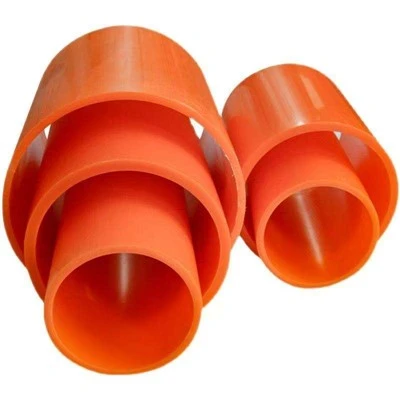
First, let’s skip the stuffy textbook definitions and keep this real. MPP stands for Modified Polypropylene, right? But let’s be clear — it’s not just the flimsy stuff you use for garden hoses or temporary drain lines. The MPP we supply is a reinforced polymer blend, designed to hold up to way more abuse than your basic plastic pipe. A lot of folks still mix it up with PVC or HDPE, which makes sense because all three are plastics. But MPP has a few superpowers that make it stand out when you’re tunneling, where the environment isn’t just wet and messy — it’s unforgiving.
Let’s start with the most basic tunneling headache: ground pressure. When you’re digging a tunnel, whether it’s micro-tunneling, pipe jacking, or even open-cut trenchless work, the pipe lining has to hold back the surrounding soil, rock, groundwater, and whatever else is sitting above or around the excavation. I’ve had a contractor tell me last month that their old PVC pipes cracked mid-job when they hit a layer of compacted gravel, turning a 3-day fix into a 2-week delay. Now, MPP’s compressive strength? It’s way higher than standard PVC, and it’s flexible enough to give a little without shattering. Wait, flexible but strong — that’s not a trick, that’s the reinforced core of the material. It’s engineered to distribute pressure evenly, so even if you run into unexpected hard spots, it doesn’t snap like a cheap plastic straw. Ground movement is another big one — tunneling always causes some settling, and MPP’s flexural modulus means it can handle minor shifts without leaking or failing. That’s a huge win because a leak in a tunnel isn’t just a hassle — it can destabilize the whole excavation, and no one wants to deal with that on-site at 2 a.m.
Next up, chemical resistance. Tunneling sites are gross, let’s be honest. You’ve got groundwater that might have trace chemicals from industrial runoff, wastewater utilities if you’re lining a sewer tunnel, maybe even concrete curing agents or lubricants from the pipe jacking process. A lot of common pipe materials corrode or break down when exposed to these over time. Steel pipe, for example, rusts if you don’t coat it perfectly, and that coating can chip during installation. HDPE is better than steel, but it’s more prone to degradation from strong chemicals like some solvents or acidic groundwater. MPP? It’s basically immune to corrosion. We’ve had clients use it for sewer tunnel linings in areas with high sulfur content in groundwater, and after three years, it’s holding up just like the day it went in. That long-term resistance also translates to lower maintenance — you won’t have to pull it out and replace it in 10 years, which saves a ton of money over the lifecycle of the tunnel.
Installation is where MPP really wins for a lot of tunneling teams. I talked to a micro-tunneling contractor last quarter who said they cut their installation time by 25% just switching to MPP from HDPE. Why? Two big reasons: weight and jointing. MPP is lighter than steel or even reinforced concrete pipe. When you’re jacking pipe through a tunnel, every pound adds up — more weight means more load on the jacking system, more strain on the rig, and more fuel costs. Lighter pipe means you can move it faster, and the jacking process is smoother. Then there’s joints. MPP pipe uses heat-fusion joints that are stronger than the pipe itself, or mechanical joints that are quick to assemble. I’ve seen a crew line a 100-foot micro-tunnel with MPP in half the time they used to take for the same length of concrete pipe. No more waiting for concrete to cure for joints, no more messy sealant that could leak. That’s a big deal when your timeline is tight — and let’s face it, tunneling timelines are always tight.
Wait, but let’s not ignore the downsides, because I’m not here to sell you something that doesn’t have tradeoffs. A lot of old-school engineers will tell you MPP has lower temperature resistance than steel or concrete. That’s true — if you’re dealing with constant temperatures above 140°F, MPP will start to lose some of its strength. But for most standard tunneling applications — utility tunnels, sewer lines, water lines, small transit tunnels — the ground temperature is way lower than that. Even in warmer climates, the deeper you go, the more stable the temperature, so MPP holds its own. Another thing: UV exposure. If you’re storing MPP pipe on-site for more than a few weeks before installation, it can degrade a little from direct sunlight. But that’s an easy fix — just cover it with a tarp or keep it in the shade until you’re ready to lower it into the tunnel. It’s not a dealbreaker, just something you have to plan for, which most contractors already do with any pipe material.
Let’s get specific with real-world examples, because numbers and actual jobs matter. Last year, we supplied MPP pipe for a 1.2-mile sewer micro-tunnel project in the Midwest, where the ground had a mix of clay, gravel, and high-sulfur groundwater. The original plan was to use reinforced concrete pipe, but the contractor switched to MPP after they did a pressure test and saw how much more flexible and resistant it was. They ran the pipe jacking at an average of 15 feet per day, which was 5 feet faster than their projected rate for concrete. Two years post-install, the project manager reached out to say there’s zero leakage, no signs of corrosion, and the pipe is holding up perfectly even in areas where the ground shifted 2 inches after excavation. Another job: a small utility tunnel under a busy downtown street in the Southeast, where they had to line the tunnel quickly to avoid closing the road longer than necessary. MPP pipe let them finish the lining in 3 days, compared to the 7 days they would have needed for HDPE, because of the faster joints and lighter pipe. The road only closed on weekends, which saved the city over $100k in traffic disruption costs.
Now, let’s talk about why I as a supplier can stand behind this, not just because it’s my product — but because we’ve tested it, and so have our clients. We do full pressure and burst tests on every batch of MPP pipe we send out, so we know it can handle the loads for micro-tunneling, pipe jacking, and even short-span culvert tunneling. We also work with contractors to get the right diameter and wall thickness for their specific project — not a one-size-fits-all, which is key. A small utility tunnel needs a different MPP pipe than a large sewer tunnel, and we tailor the material to fit that.
I know there’s still skepticism out there. Some folks in the industry have been using steel or concrete for decades, and switching to a newer material feels risky. But here’s the thing: tunneling technology has evolved, and materials have too. MPP isn’t the new kid on the block anymore — it’s been used in utility and infrastructure projects for over 20 years, and it’s proven itself in tough conditions. The key is matching the right MPP variant to your project. If you’re doing a deep, high-temperature industrial tunnel, maybe MPP isn’t the best pick, but for 90% of standard tunneling applications — utility lines, sewers, small transit, culverts — it’s more than suitable.
If you’re currently dealing with pipe failures mid-tunnel, over-budgets from slow installation, or maintenance headaches from corroded pipe, let’s chat. I can walk you through the specs for your specific project, share case studies from similar jobs, and help you figure out if MPP pipe is the right fit for your tunneling work. No pressure, no sales pitch that ignores the downsides — just honest, real info from someone who’s actually in the field supporting contractors every day.
When you’re picking a pipe for tunneling, you’re not just picking a material — you’re picking reliability, speed, and long-term cost savings. MPP checks all those boxes for most jobs. It’s strong enough to handle ground pressure, flexible enough to handle shifting ground, chemical-resistant enough to hold up to the worst tunneling site mess, and fast enough to keep your project on track. Yeah, it’s not perfect for every scenario, but for most tunneling applications? It’s absolutely suitable, and a lot of contractors are kicking themselves for not switching sooner.
If you want to dive deeper into whether MPP pipe works for your upcoming tunneling project, reach out to connect and discuss your specific needs. Let’s figure out the best solution for your job, no fine print, no fluff.
PP-R Pipes and Fittings References:
- American Society of Civil Engineers. (2021). Trenchless Technology Material Performance Report. ASCE Press.
- Modified Polypropylene Pipe Manufacturers Association. (2022). MPP Pipe Design and Installation Guidelines for Tunneling Applications. MPPI Publications.
- Journal of Pipeline Systems Engineering and Practice. (2020). Performance of Reinforced Polymeric Pipes in Micro-Tunneling Operations. Vol. 11, No. 3.
Shanxi Kaisheng Plastic Co., Ltd.
As one of the most professional mpp pipe manufacturers and suppliers in China, we’re featured by quality products and good price. Please rest assured to buy customized mpp pipe made in China here from our factory. Welcome to contact us for quotation.
Address: No.72, Area S, Gate 1, Haohai Wumart, Fendong Street, Xiaodian District, Taiyuan City, Shanxi Province
E-mail: sxkssj8@163.com
WebSite: https://www.sx-kssj.com/
