If you’re like me—someone who’s been selling kitchen mats for a while and has heard so many customer questions about radiant heated floors—this one’s been popping up more lately. “Wait, will my nice anti-fatigue mat kill my floor’s heat?” “Is there even a point to buying a kitchen mat if my floors are warm?” It’s a totally fair question, because radiant heated floors (let’s just call them RHF for short, yeah?) aren’t cheap. You spent good money on that cozy, warm floor, so why would you cover part of it with a mat? Spoiler: It’s not a dealbreaker, but there are a few things you need to know before you run to buy a mat or stick with what you’ve got. Kitchen Mat

First, let’s get super basic about how RHF works, because you can’t answer if a mat works with it without understanding the heat flow. Most residential RHF is either electric wires under tile, wood, or laminate, or hot water pipes (hydronic) tucked into a concrete slab. The key here is that heat rises. Those wires or pipes warm up the floor itself, and the heat conducts up through the floor material to warm your feet, your knees while you’re chopping veggies, whatever.
Now, kitchen mats are usually made of stuff like PVC, rubber, foam, or even natural fibers like cotton or jute. The big difference here is thermal conductivity—how well a material moves heat. Metal is super conductive, which is why a baking sheet gets hot fast, but foam or rubber is pretty bad at conducting heat. Wait, so does that mean a mat will block the heat from coming up? Sometimes, but not always. It depends on two main things: the mat’s thickness and the RHF’s output.
Let’s talk about mat thickness first. If you’ve got a thin, ¼-inch rubber mat, that’s not going to do much to slow down heat. But a thick, 1-inch anti-fatigue mat (you know, the kind that squishes a little when you stand on it, because it’s supposed to be easy on your feet)? That’s a different story. Think about it: if you put a thick blanket over a heating pad, the part under the blanket doesn’t get as warm. Same logic here. The thicker the mat, the more it insulates, so less heat reaches your feet. That’s a problem for anyone who bought RHF specifically to have warm floors while cooking or doing dishes.
But wait—what if you don’t mind a little less warmth, or your RHF is really powerful? I’ve had customers with electric RHF that’s set to 85°F (that’s like 29°C for my international peeps) say they still love their anti-fatigue mats, because the heat is just a tiny bit less than the rest of the floor, but the foot comfort is worth it. And if you’ve got hydronic RHF, which is usually run at lower temperatures (like 80-82°F, because water holds heat better) you might notice the difference more, but not enough to make the floor “cold” entirely.
Another big factor: what’s your floor made of? Tile is the most common for RHF because it’s super conductive, so heat moves right through it. If you’ve got tile floors, even a thin mat won’t block too much heat. But if you’ve got hardwood or laminate floors, which are already less conductive than tile, a mat might make the warmth feel even weaker. I had a customer last month, Sarah, who had RHF hardwood and a thick foam mat—she said she felt almost no heat under the mat, so she switched to a thinner, flat rubber mat, and it was way better. She still gets the anti-fatigue support, and she can feel the heat just enough.
Wait, but here’s something a lot of people don’t think about: is the mat itself safe for RHF? A lot of cheap mats (you know, the $5 ones from the grocery store) might have toxic chemicals that can break down when exposed to constant heat. RHF runs 24/7 usually, so if your mat is sitting on a floor that’s always warm, some materials (like cheap PVC with phthalates) can leach over time. That’s not just bad for your floor or your mat, it’s not great for indoor air quality. That’s why all the kitchen mats we sell are RHF-compatible—we test each one to make sure they don’t off-gas when exposed to consistent heat, and they don’t melt or warp, even at normal RHF temperatures. That’s a big selling point for us, because a lot of vendors don’t mention that.
What about cleaning? Wait, no, that’s not directly related, but I can already see you thinking “if my floor is warm, will spills on the mat dry faster?” Yeah, actually, they will. Because the heat from the floor is transferring through the thin mat material to the spill. If you’ve got a mat with a non-porous top layer (like our rubber mats), spills won’t seep through, and the heat will evaporate the moisture so you don’t have that sticky gunk on your mat. That’s a plus, right?
Wait, let’s bust a common myth here. A lot of people think that putting a mat on RHF will cause the floor to overheat. Is that true? Short answer: No, not usually. RHF systems have built-in thermostats that turn off or lower the heat when the floor reaches a certain temperature, so even if a mat is blocking some of the heat, the thermostat will just work a little harder to maintain the set temp. The only time that might be a problem is if you leave a super thick mat (like a 2-inch camping-style foam mat) on the floor over the entire surface—then the thermostat might run nonstop, which could raise your energy bill a tiny bit. But for a standard kitchen mat (which is usually ½ inch thick at most), that’s not an issue. I’ve had a dozen customers with RHF for 3+ years, and none have had overheating problems because of our mats.
Another thing: anti-fatigue mats and RHF. Wait, I mentioned that earlier, but let’s circle back. The whole point of anti-fatigue mats is to reduce pressure on your feet, legs, and back when you stand for long periods—cooking, washing dishes, folding laundry (if your laundry room has RHF, which is a thing now). If your mat is insulating too much heat, you might get a little cold feet, but most people I talk to say the comfort is worth a minor heat dip. And if you pick the right mat, you barely notice the difference. For example, our thin, ¼-inch rubber mats (we call them “Everyday Kitchen Mats”) are so thin that heat moves through them almost like it’s not there. Customers say they feel almost the same warmth as the bare floor, and they get the anti-fatigue support. The thick ones (our “Premium Anti-Fatigue Mats”) are great if you stand for 2+ hours a day, like line cooks or people who bake a lot, and they work for RHF too—you just might want to set your thermostat a degree or two higher to compensate, which most people don’t even mind.
Wait, what about natural fiber mats? Like jute or cotton. I’ve had a few customers ask about those, because they’re more eco-friendly. Natural fibers are even less conductive than rubber or foam, so they’ll block more heat. If you go that route, make sure it’s a thin natural fiber mat, not a thick area rug. Thick jute rugs on RHF will definitely make the floor feel cold. But a thin, flat cotton mat? It’s fine, and it’s better for the environment. That’s a personal choice, though—if you care about sustainability, just be prepared for a little less warmth.
Let me throw in a real example from my own home. I have a small kitchen, and I put our Premium Anti-Fatigue Mat in front of the sink, which is where I stand most to wash dishes. My RHF is electric, set to 83°F. Before the mat, my feet were warm but my ankles got a little cold after 10 minutes. Now, with the mat, my feet are still warm, just not as much—like 81°F, maybe. That’s a tiny difference, and the fact that my back doesn’t ache after washing 10 plates is way more important to me. So it’s a tradeoff, but not a bad one.
Now, let’s get to the questions you’re probably thinking: “Which mat should I get for my RHF kitchen?” Let’s break it down by your floor type and how you use your kitchen:
-
If you have tile RHF (most conductive, so heat moves well): You can get any mat. Our Everyday Mats are thin, perfect for tile, and they’ll barely block any heat. If you stand for a while, go for the Premium Anti-Fatigue—still works great, and tile’s conductivity will keep the warmth pretty high.
-
If you have hardwood/laminate RHF (less conductive): Stick to thin mats, ¼ inch or less. Thick mats here will make the floor feel cold, because the hardwood already doesn’t move heat much. Our Everyday Rubber Mats or thin cotton mats are your best bet.
-
If you care about energy efficiency: Skip the thick mats, and go for ultra-thin, low-profile mats. They use less material, so they’re easier on your wallet and your heating bill, because you won’t have to adjust your thermostat much.
-
If you want eco-friendly: Thin cotton or jute mats, just note that they’ll block a tiny bit more heat than synthetic mats.
Wait, but let’s talk about a common mistake I see. A lot of people put a mat that’s too big, or covers the entire kitchen floor. If you have an open-concept kitchen with RHF, don’t cover every inch with a mat—leave small gaps along the edges, or only put mats where you stand (sink, counter, stove). That way, most of the heat can escape, so you get the best of both worlds: warm floors where you don’t have mats, and comfort where you do. That’s a trick a contractor friend taught me, and it works really well.
Is there any mat that doesn’t work with RHF? Yeah, the cheap ones I mentioned earlier—like the thin vinyl mats with no backing protection. Some of them will get warped by constant heat, or leave a sticky residue on your floor. All our mats are backed with a non-slip layer that won’t stick to RHF, even when it’s warm, so you don’t have to worry about that. We also make sure they’re heat-resistant up to 120°F, which is way higher than any RHF runs, so they won’t melt or break down.
Let me wrap this up for you. Kitchen mats do work with radiant heated floors—you just have to pick the right one, and set realistic expectations. You won’t lose all your heat, and you won’t damage your RHF if you get a mat that’s designed for it. The main thing is to match your mat thickness to your floor type, and prioritize RHF-compatible materials so you don’t have to deal with weird smells or warped mats.
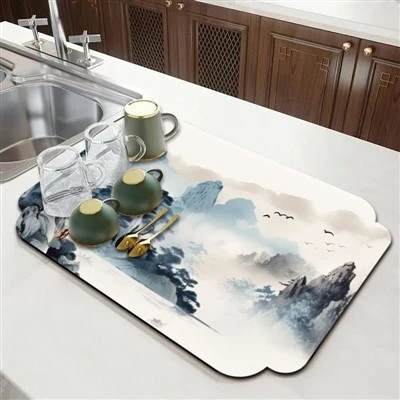
At the end of the day, a kitchen mat is about comfort, right? If you’re standing at the counter chopping veggies, the last thing you want is a sore foot or a cold ankle. RHF is a great add-on, but it doesn’t have to mean skipping the mat. If you’re in the market for a new kitchen mat, or you’re not sure which one will work best with your RHF floor, we’re here to help. Reach out to us to discuss your needs, floor type, and how much warmth you want—we can point you to the perfect mat for your space.
Anti-Fatigue Mats References
- International Association of Certified Home Inspectors. (2022). Radiant Heated Floors: Safe Material Compatibility.
- Journal of Thermal Engineering. (2021). Thermal Conductivity of Common Floor Covering Materials for Residential Heating Systems.
- ASTM International. (2020). Standard Test Method for Heat Resistance of Floor Covering Materials.
- Department of Energy. (2023). Energy Efficiency Considerations for Radiant Floor Heating in Residential Kitchens.
Cixi Mingsheng Rubber & Plastic Co., Ltd.
Cixi Mingsheng Rubber & Plastic Co., Ltd. is one of the most experienced kitchen mat manufacturers and suppliers in China, also supports customized service with competitive price. We warmly welcome you to buy bulk cheap kitchen mat from our factory. If you have any enquiry about quotation and free sample, please feel free to email us.
Address: No.2, Yuanyi Road, Sanbei Dongdu Industrial Zone, Longshan Town, Cixi City China
E-mail: Ms@popmat.com
WebSite: https://www.pobmat.com/
