If you’ve ever stared at a control panel, a industrial machine, or even a kitchen appliance and wondered why one button clicks for just a split second while another stays pressed down until you push it again, you’re not alone. When I’m chatting with customers at my button switch supply business, that’s the first question most of them ask. A lot of folks just grab whatever switch looks cheapest, only to run into headaches later—like a vending machine that won’t dispense soda because the momentary switch bounces, or a test lab gauge that glitches because the maintained switch sticks too long. Let’s break this down straight, no jargon, so you can pick the right one without overthinking. Button Switch
First, let’s get the basics out of the way, super simple: momentary switches only stay active while you’re holding them down. Let’s say you’re pushing a doorbell—release your finger, and the chime stops. That’s momentary. Maintained switches, on the other hand, toggle between on and off when you press them. Push once, it locks in “on”; push again, it clicks back to “off.” Think a light switch on your wall—you don’t have to hold it the whole time the light is on. But before you go picking one, stop and ask yourself two non-negotiable questions: what’s the job this switch has to do, and how hard is it to access that switch?
Let’s start with momentary, because they’re way more common than I used to realize. I sell these for all sorts of stuff—industrial foot pedals, arcade game buttons, even remote control triggers for power tools. The big win here is safety, hands down. If a kid yanks their hand off a arcade machine, or a worker slips and lets go of a grinder’s trigger, the switch stops immediately. No risk of the machine running when you don’t want it to. But there’s a catch: you have to press them every time you need to use the function. If you’re running a factory assembly line where a worker needs to hold a button for 8 hours a day, their thumb’s gonna cramp. That’s a no-brainer, but I still see people waste money on momentary switches for that kind of job.
Another thing about momentary switches: they’re way better for functions that are meant to be temporary. Like, if you need to reset an error code on a piece of equipment, a quick tap is all you need—hold it too long, and you might accidentally clear settings you didn’t want to. I had a customer last year who installed maintained switches for reset buttons on their packaging machines. Within a week, half their lines were glitching because workers held the button too long and reset the entire production cycle, not just the error. They swapped back to momentary, and that problem vanished. Worth noting too: momentary switches are usually cheaper to make, so if you’re on a tight budget for a part that gets lots of use, that’s a plus.
Now the maintained switches—their whole thing is convenience for functions you use over and over again without stopping. Think power buttons on laptops, kitchen appliance controls, machine start buttons. You press once, it stays on, no holding. That’s perfect for long, consistent tasks. Like a CNC machine that runs for hours at a time—you don’t want a worker holding a button the whole time, that’s inefficient and bad for their joints. I work with a lot of small machine shops that swear by maintained switches for their main power controls because it cuts down on user error and fatigue.
But maintained switches have a downside: accidental activation is way easier. If you bump a start switch on a machine, it might kick on, which is a safety hazard. Or if you have a product with a maintained switch that someone presses and forgets to turn off, you get wasted energy or even overheating. I once had a customer who used a maintained switch for their electric space heaters in a workshop. They came in one morning to find half the building was cold—someone had pressed the heater switch by mistake, and it ran until it overheated and shut off automatically. Swapping in momentary switches for the heater’s trigger fixed that, because you have to hold it to run, so you can’t just bump it.
Wait, let’s talk about use cases that trip people up the most. Let’s say you’re building a piece of fitness equipment—like a treadmill. The start button: that’s a maintained switch, right? Once you get it going, you don’t want to hold it. But the emergency stop button (the big red one you yank if you trip or the machine glitches) needs to be momentary? No, actually—wait, no, most E-stop buttons are maintained, but they’re designed to be easy to release when you need to. Wait, let’s clarify that: E-stops are a special case because they’re meant to be a safety override, so you need a switch that’s hard to activate accidentally but easy to reset when you’re done. But for regular functions on fitness gear, like the incline adjust, a momentary switch works better—you press it to go up, release to stop, so you don’t accidentally make the treadmill too steep.
Another example: vending machines. The selection buttons—those are momentary, right? You press once to trigger the motor, release when it’s done. If they were maintained, you’d have to press and hold until the item drops, which is annoying, and people would forget to let go, leading to jammed motors. But the main power switch for the vending machine? That’s definitely maintained—you don’t want to hold the power on all the time when the machine’s not running.
Let’s get into factors you probably haven’t thought about yet, beyond just the function. First, user base. Who’s gonna be pressing these switches? If it’s kids playing arcade games, momentary is fine—they’re used to tapping. If it’s older workers with joint pain, maintained is way better, because holding a button all day is rough. I have a set of customers who make mobility aids, and they almost exclusively use maintained switches because their users have limited grip strength—no way they can hold a button down for a long time.
Then, environment. If your switch is going outdoors, or in a wet factory, or somewhere with dust, momentary switches can have issues with bounce—when the metal contacts tap together a tiny bit after you press, so the machine thinks you pressed it multiple times. Most good switch suppliers (like mine, if you ever reach out) offer switches with anti-bounce contacts that fix that, but it’s something to consider. Maintained switches, on the other hand, can have stickiness issues if dust gets in the toggle mechanism, so you might need a sealed version if it’s in a dirty area.
Cost, obviously, is a factor, but not as much as people think. Momentary switches are usually a little cheaper upfront, but if you have a high-use application, the wear and tear on momentary switches from repeated pressing can mean you’re replacing them every few months. Maintained switches are more durable for long-term use, so over a year or two, they might end up costing less. I’ve had customers come to me because they were buying cheap momentary switches that broke every 2 months, and switching to a mid-range maintained switch saved them money on replacements.
Wait, what about special cases? Like latching vs non-latching? Oh, that’s another term that confuses people, but it’s just another way to categorize maintained switches. Latching means the switch stays in its state until you press it again (that’s the standard light switch kind). Non-latching maintained switches? Wait no, actually non-latching is momentary—no, don’t mix that up. Let me rephrase: maintained switches are almost always latching, momentary are non-latching. You don’t need to get fancy with that, just remember: if it toggles between on and off with one press, it’s maintained; if it’s only active while you press, it’s momentary.
I should also mention a common mistake I see: people pick the wrong switch because they copied a competitor’s design, without thinking about their own product’s use case. Last year, a startup that made portable blenders came to me with a maintained power switch. Their first batch of units went back because people kept accidentally turning them on in their bags, leaking all over the blender motors. They swapped to a momentary switch that requires you to hold it to run, and returns dropped by 70%. That’s exactly the kind of avoidable problem that comes from not thinking through what your product actually needs.
So how do I sum this up for you, real simple? If your function is temporary, needs safety (stop when you let go), or only needs to be activated once for a short task—go momentary. If your function is long-term, you don’t want to hold the button, or it’s a main power/control that’s used repeatedly—go maintained. And if you’re still not sure, just ask: what’s the worst that could happen if I pick the wrong one? If it’s a safety hazard, go momentary. If it’s just an inconvenience, go whatever is cheaper.
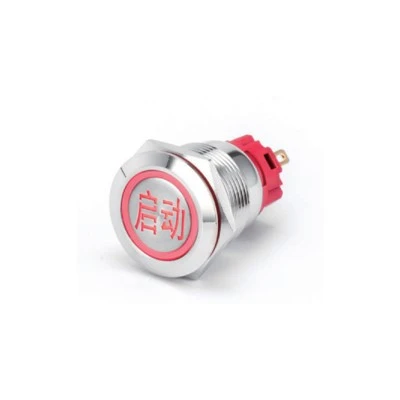
At the end of the day, I’ve been supplying button switches for years, and I’ve seen way too many people overcomplicate this. It’s not about which is “better” overall—it’s about which works for your specific job. If you’re working on a new product, or having issues with switches that keep breaking, or just want to talk through what’ll work best for your application, hit me up for a quote or a quick chat. No sales pitch, just honest advice on what’ll actually save you time and money.
Ultra Thin Relay References
- Industrial Switch Association. (2022). Button Switch Selection Guide for Industrial and Commercial Applications. International Association of Electromechanical Manufacturers.
- Consumer Product Safety Commission. (2021). Safety Considerations for Momentary vs. Maintained Switches in Consumer Electronics. U.S. Department of Commerce.
- Ergonomics Society. (2020). User Input Device Design for Reducing Musculoskeletal Fatigue. The Ergonomics Society, UK.
Zhejiang Weide Electric Co., Ltd.
Zhejiang Weide Electric Co., Ltd. is one of the most professional button switch manufacturers and suppliers in China, featured by quality products and low price. If you’re going to buy the newest button switch, welcome to get free sample from our factory. We also accept customized orders.
Address: No.555, South Binhe 2nd Road, Yueqing City, Zhejiang Province, China
E-mail: zjwdir@wdirele.com
WebSite: https://www.chweide.com/
