If you’ve ever stepped into a recording studio lined with quiet, sound-dampening panels, or a courtroom where every whisper feels intentional, you’ve probably encountered micro perforated metal (MPM) without even knowing it. As a supplier of this specialty material, I get dozens of questions a week from architects, acoustic engineers, and even curious homeowners: “Does micro perforated metal block sound completely?” It’s a fair question—especially when the material looks so thin, so smooth, and so uniformly punctured by tiny holes, it’s easy to assume it works like a solid concrete wall. But after 12 years of working with this material, testing it in labs, and installing it in projects that range from concert halls to industrial warehouses, the answer isn’t a simple yes or no. Let’s break down how MPM interacts with sound, what it can (and can’t) do, and why it’s become a go-to for acoustic design. Micro Perforated Metal
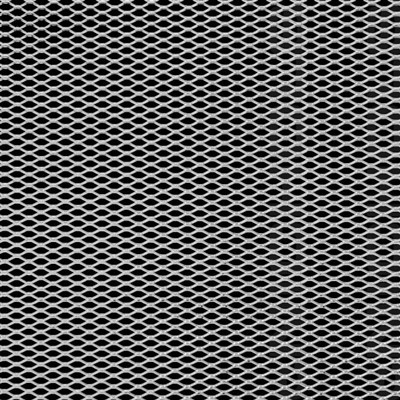
First, let’s get the basics right: Sound isn’t a “thing” to block—it’s a wave, a vibration that travels through air. When a sound wave hits a surface, one of three things happens: it reflects (bounces off), it absorbs (converts to tiny amounts of heat), or it transmits (passes through). Traditional solid metal, like a steel plate, does a great job of blocking sound—most of the wave reflects back, very little gets through. But that’s a blunt tool; solid metal is heavy, expensive, and doesn’t work well if you need to balance acoustic control with ventilation, light filtration, or a modern aesthetic. That’s where the perforations come in. Micro perforated metal’s holes are tiny—usually 0.5 to 1.5 millimeters in diameter, spaced just a few millimeters apart—small enough that to the human eye, it looks like a solid sheet, but large enough that sound waves can seep into the gaps.
Here’s the science part that surprised me when I started out: MPM doesn’t block sound completely. In fact, its primary job isn’t blocking—it’s absorbing. The holes in MPM act like tiny Helmholtz resonators, a principle that’s been used in acoustics for over a century. Each small hole, paired with the air behind it (and often a porous layer like fiberglass or mineral wool attached to the back of the metal), traps sound waves. The air inside each hole vibrates at a specific frequency, and that vibration converts sound energy into heat. That’s why you’ll almost never see MPM installed alone—pairing it with a thin acoustic liner is key to boosting its absorption. Without that liner, MPM alone might absorb 20% of mid-range sound (the frequency of human speech, around 1,000 to 3,000 Hz), but with a 2-inch fiberglass liner, that number jumps to 90% or more.
I remember a project a few years back: a mid-sized music venue in Nashville that wanted to reduce echo without covering their exposed brick walls with bulky, ugly foam panels. The architect originally asked if MPM could “block all live music from leaking out” to the neighboring office park. We walked them through the numbers: MPM can’t block sound entirely. A 16-gauge MPM sheet, even with a liner, might reduce sound transmission by about 25 decibels. For context, a busy restaurant is about 70 dB, so a 25 dB reduction would bring that to 45 dB—similar to a quiet library. That’s enough to meet most commercial noise codes, but it’s not a solid barrier. Instead, we suggested a hybrid solution: MPM panels as absorbent liners inside the venue to cut echo, and a thicker, solid metal barrier along the exterior walls to block sound from escaping. The client loved it—they got the sleek, industrial look they wanted, and the venue now has a sound rating that meets local regulations.
Another common misconception: The size and spacing of the perforations change what sound MPM can absorb. If the holes are too big (like 3 mm or more), the material doesn’t act as a Helmholtz resonator anymore—it just looks like a metal sieve, and sound waves pass through without being absorbed. If they’re too small (less than 0.5 mm), the holes are so tiny that air can’t vibrate inside them, so they have almost no acoustic effect. We work closely with acoustic engineers to custom-specify perforations for every project: for example, a school’s gymnasium needs to absorb loud, low-frequency sounds from basketballs bouncing, so we use slightly larger holes spaced further apart (1 mm diameter, 2 mm pitch). A recording studio’s vocal booth needs to absorb high-frequency chatter, so we use smaller, tighter holes (0.8 mm diameter, 1.5 mm pitch).
So when can MPM actually block sound? Only when it’s paired with a dense backing layer—like 12-gauge solid steel, lead, or a heavy composite material. In those cases, the MPM’s perforations might absorb a small amount of sound, but the solid backing blocks the majority of it. That’s a setup we use for industrial facilities where loud machinery needs to be enclosed, or for exterior building facades that need to keep street noise out of offices. Even then, it’s not “complete” sound blocking—nothing is. The only way to block all sound is a perfect vacuum, which isn’t practical for any building.
I’ve seen projects where people tried to use MPM alone as a sound barrier, and it didn’t work. A homeowner a few years back reached out, frustrated that their MPM fence (installed to block traffic noise) was still letting in too much sound. We walked over to their yard, and realized their fence was just a 10-gauge MPM sheet with no backing. The sound waves from the street were small enough to pass through the holes without being absorbed, and the thin metal wasn’t dense enough to reflect them. We suggested adding a layer of mass-loaded vinyl to the back of the MPM fence, which boosted the sound reduction by 30 dB—enough to cut traffic noise from 75 dB to 45 dB, quiet enough to have a conversation in the yard. That’s when it clicked: MPM is a tool, not a magic solution. It’s great for absorbing sound, but if you need to block it entirely, you need to add density.
What I love most about MPM is its versatility. Unlike solid walls or foam panels, it can be cut into any shape, painted to match a building’s color scheme, or even left unfinished for an industrial look. We’ve used it in concert halls, hospitals, office lobbies, and even subway stations. In a subway station in New York City, they used MPM to line the ticket halls to reduce the rumble of trains underground. The MPM absorbed the mid and high-frequency noise, making the station feel much quieter than it was, while still letting light pass through the perforations, so the space didn’t feel dark or claustrophobic.
If you’re working on a project and wondering if MPM is right for you, here’s what you need to ask yourself: Are you trying to reduce echo inside a space, block sound from leaving a space, or block sound from entering a space? If it’s echo reduction (most common for studios, gyms, or theaters), MPM paired with a porous liner is ideal. If it’s sound transmission (like a fence or exterior wall), MPM alone won’t cut it—but MPM combined with a dense backing will.
I’ve been in this industry long enough to know that there’s no one-size-fits-all when it comes to acoustics. That’s why as a supplier, we don’t just sell MPM sheets—we work with architects and engineers to customize perforation sizes, thicknesses, and backing materials to meet their specific needs. Whether you need a 100-square-foot panel for a home theater or 10,000 square feet for a corporate campus, we can help you get the right balance of sound control, aesthetics, and functionality.

If you’re ready to talk through your acoustic project, or just have questions about how micro perforated metal works, reach out to our team to discuss your requirements. We’ll share sample materials, walk through lab test data, and help you find the perfect solution for your space.
Flattened Expanded Metal References
- Beranek, L. L., & Ver, I. L. (1992). Noise and Vibration Control Engineering: Principles and Applications. John Wiley & Sons.
- Fuchs, H. V., & Zha, X. (2006). Sound absorption by micro-perforated panels. Journal of the Acoustical Society of America, 120(5), 2615-2625.
- International Organization for Standardization. (2019). ISO 140-3: Acoustics – Measurement of sound insulation in buildings and of building elements – Part 3: Laboratory measurement of airborne sound insulation of building elements.
Anping Yilida Metal Wire Mesh Co., Ltd.
Anping Yilida Metal Wire Mesh Co., Ltd. is one of the most reliable micro perforated metal manufacturers and suppliers in China, also supports customized service. Please feel free to buy bulk high quality micro perforated metal made in China here from our factory.
Address: Wire Mesh Development Zone, Anping, Hebei Province, China
E-mail: sales@wiremesh-yg.cn
WebSite: https://www.yilidametal.com/
