If you’ve ever walked past a commercial building, a residential patio, or a construction site and noticed thin, interwoven metal screens mounted on windows, railings, or fence lines, you might’ve wondered the same thing I hear every week from architects, contractors, and homeowners: does security wire mesh block light? For 12 years, I’ve been supplying security wire mesh for projects across North America, and this question comes up more often than you’d think—usually paired with frustration. Too many vendors will tell you either it blocks all light or it doesn’t matter at all, and neither answer helps when you’re trying to balance safety with natural light in a space. Today, I’m breaking this down with real-world context, not textbook jargon, and how to choose the right mesh for your needs. Security Wire Mesh
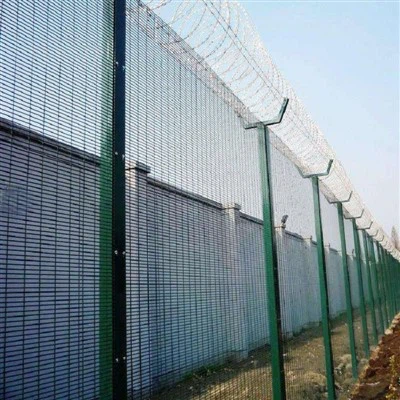
First, let’s start with the basics: what is security wire mesh, and how is it made? It’s not just a random grid of metal wires. The mesh I supply uses either stainless steel, galvanized steel, or aluminum, woven in a pattern that’s tight enough to deter intruders—no one can pull it apart, cut through it with basic tools, or climb through it easily. The two most common weave patterns we work with are plain square weave and twilled square weave, and that’s where the light difference starts. Plain square weave has wires crossing at right angles, with equal gaps between each wire, while twilled weave weaves the wires in a slightly over-under pattern that makes the gaps a little irregular.
Now, light is just electromagnetic radiation that our eyes can see, right? So to measure how much light passes through a screen, we talk in terms of “transmittance”—how much of that visible light gets through the gaps in the mesh, instead of being absorbed or blocked by the metal wires. A solid wall blocks 100% of light, a window glass is about 90% transmittance, and security wire mesh usually falls somewhere between 30% and 80%—but that’s a huge range, and it all depends on three key factors: wire size, gap size, and weave pattern.
Let’s break those factors down with examples from the mesh we stock. Wire thickness is measured in gauge, and lower gauge means thicker wire. Our 10-gauge security mesh uses wires that are about 3.4 mm thick, with gaps between wires of 7 mm each. That’s the mesh we use for warehouse perimeter fences or high-security window guards, and its light transmittance is roughly 45%—so if a room has a window with 80% light, adding this mesh cuts that to about 36% of the original natural light. On the other end, our 16-gauge decorative security mesh, used for residential patio railings or storefront window screens, has thinner wires (1.6 mm thick) and gaps of 12 mm. That transmittance jumps to about 75%—so you’d barely notice a difference in how bright the room feels during the day.
The weave pattern amplifies that difference too. The same wire and gap size can have a 5-10% transmittance gap between plain and twilled weave. Plain square weave has straight, aligned gaps that let light pass through unobstructed, while twilled weave has slightly overlapping wires that create tiny shadows in the gaps—so even if the gaps are the same size, less light gets through. That’s why when a homeowner tells me they don’t want their living room to feel dark, I steer them toward a 16-gauge plain weave, not a 12-gauge twilled weave.
Now, a common misconception here is that security wire mesh will always block enough light to make a space feel dim, like a basement or a small room. I used to think that too when I first started in this business, until I did a job for a family in Portland a few years back. They wanted security screens for their ground-floor windows to keep their toddler safe and deter break-ins, but they refused to install mesh that would make their living room, which only has one window, feel like a cave. We installed our 16-gauge plain weave aluminum mesh, and when they texted me a week later, they said they couldn’t tell the difference in how bright the room was during the day—at night, though, it was a different story. That’s another thing to consider: light transmittance works in both directions. During the day, when it’s brighter outside than inside, the mesh acts almost invisible because the light outside is so strong it washes out the dark gaps in the screen. At night, when you turn on lights inside the house, you can see the mesh from outside, but from inside, it looks like a faint, uniform screen that doesn’t block your view of the dark sky—you just can’t see details of the outside, which is exactly what the family wanted.
Another factor people don’t think about is color and finish. I know it sounds minor, but the coating on the metal wires can change light transmittance too. Our standard galvanized steel mesh has a dull silver finish that reflects a little light, so it doesn’t absorb as much, keeping transmittance higher. We also offer a black powder-coated finish, which is more popular for modern homes because it blends with dark window frames. That black finish absorbs more light, so a black coated 16-gauge mesh has about 5% lower transmittance than the same mesh in silver. For a commercial storefront, that’s usually not a big deal, but for a residential space where you care about natural light, the silver finish is the way to go.
Now, what about cases where people say the mesh blocks too much light? That’s usually when they’ve picked the wrong mesh for the space. For example, a school’s gymnasium, which needs plenty of natural light for kids to see and for security cameras to work, doesn’t need a 10-gauge perimeter mesh. We work with a lot of schools, and most use a 12-gauge plain weave with 9 mm gaps, which has about 60% transmittance—plenty of light for a large space, but still tough enough to stop someone from trying to break into the gym after hours. On the flip side, a residential backyard fence might use a 12-gauge twilled weave, which is a little more private, but has enough light for the backyard to feel open, not enclosed.
I also get questions about mesh blocking light at night, when it comes to home security cameras. A lot of our clients use outdoor security cameras with night vision, and they’re worried the mesh will block the infrared light the cameras use to see in the dark. That’s a valid concern, and here’s the thing: visible light and infrared light are different wavelengths, so a mesh that blocks 50% of visible light will block a similar amount of infrared. But most modern security cameras have enough sensitivity to pick up infrared light even through mesh, as long as the mesh isn’t too thick. We’ve had clients test our 16-gauge mesh with their night vision cameras, and most say the footage is clear enough to identify faces and license plates—you just don’t get as bright a picture as you would without the mesh. If a client is installing mesh near a camera, I always recommend going with a thinner gauge (16 or 18) with larger gaps, because that keeps the infrared transmittance higher without sacrificing security.
There’s also a myth floating around online that security wire mesh is opaque, like a solid metal screen. That’s only true if the mesh is extremely tight, like a micro-mesh used for filtering, which isn’t what we supply for security applications. Our security mesh is designed to be see-through enough to not feel like you’re living behind bars—unless you want it to be. For high-security areas like bank vaults or correctional facilities, we do offer mesh with smaller gaps and thicker wires, which has a transmittance of around 30%, and that does block a noticeable amount of light. Those are special order items, though, and most of our clients don’t need that level of restriction.
Let me also talk about how to test this for yourself if you’re planning a project. If you’re torn between two mesh options, ask your supplier for a light transmittance spec sheet, or better yet, ask to see a sample. Hold the sample up to a window at noon on a sunny day, and look through it. If you can see details of the outside (like trees, people walking by) clearly, the transmittance is high, and it won’t block much light in your space. If the outside looks blurry or dark, the transmittance is low, and you’ll notice a difference in how bright the room is. I always encourage clients to test samples because every space is different—what works for a small apartment might not work for a large office, and vice versa.
One more thing to consider is cleaning. Wait, how does cleaning relate to light transmission? Well, if your mesh gets dusty or dirty, that dust will settle on the wires and in the gaps, blocking light over time. A mesh that’s easy to clean will maintain its light transmittance for years, while a porous, hard-to-clean mesh will start to look darker after a few months. The security wire mesh we supply is smooth, made of stainless steel or powder-coated metal, so you can wipe it down with a cloth or a hose, and it won’t trap dirt. That’s a big part of why we emphasize easy maintenance—because no one wants to install a security screen that looks dark and dingy a year later because it’s caked with grime.
At the end of the day, the answer to “does security wire mesh block light?” is not a simple yes or no. It depends on what kind of mesh you get, where you’re installing it, and what your priorities are. If you want maximum light, go for a thinner gauge, plain weave, larger gaps, and a light-colored finish. If you want maximum security and don’t mind a little less light, you can go for a thicker gauge, smaller gaps, and a darker finish. The worst thing you can do is choose a mesh based solely on price, because a cheap, thick, small-gap mesh will block way more light than you need, and it’ll make your space feel cramped.
For 12 years, I’ve seen clients make that mistake over and over: they get a quote for the cheapest security mesh, install it, and then regret that their home or office feels dark during the day. That’s why I always take the time to talk through their needs—whether they’re a homeowner wanting patio screens, a contractor working on a commercial building, or a property manager updating a warehouse. I walk them through the gauge, weave, and gap options, show them samples, and explain exactly how much light each will block. Because security shouldn’t mean sacrificing the light that makes a space feel like home, or functional for work.

If you’re planning a project and want to get the right security wire mesh that balances safety and light, reach out to discuss your requirements. We can help you pick the ideal mesh for your space, provide samples, and work with your timeline to get your order processed quickly. Don’t settle for a mesh that will leave your space feeling dim—let’s find the right fit together.
Machine Guard Mesh Panels References:
- American Architectural Manufacturers Association. (2021). Standard Test Method for Light Transmittance of Window Materials.
- Steel Wire Manufacturers Association. (2022). Properties of Security Wire Mesh for Construction Applications.
- National Institute of Building Sciences. (2020). Balancing Security and Natural Light in Commercial and Residential Building Design.
- International Code Council. (2021). Residential Security Screen Requirements and Performance Standards.
Anping County Nuocheng Wire Mesh Co., Ltd.
As one of the most professional security wire mesh manufacturers and suppliers in China, we also support customized service and OEM service. Please feel free to buy high quality security wire mesh for sale here from our factory. For price consultation, contact us.
Address: 100 meters southeast of Beimanzi Village, Dahezhuang Township, Anping County, Hengshui City, Hebei Province, China
E-mail: lixuhao0888@gmail.com
WebSite: https://www.ncwiremesh.com/
