If you’ve ever walked through a flexible packaging plant, a textile factory, or a paper converting facility, you’ve probably seen that tight, repetitive slitting lines that turn large parent rolls into narrow, usable ones. For a long time, there’s been a common question on the floor: Can a pin hole slitting machine slit multiple layers at once? As a supplier who’s worked directly with plant managers, operators, and maintenance teams for over a decade, I’ve answered this question hundreds of times—and the answer isn’t a simple yes or no. It depends on the machine’s design, the material you’re running, and the standards your application requires. Pin Hole Slitting Machine
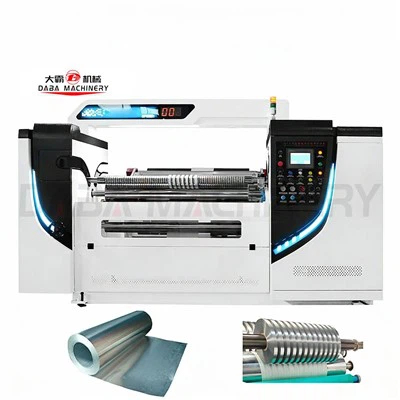
First, let’s break down what a pin hole slitting machine actually does, because that’s core to understanding why multi-layer slitting works (and where it hits limits). Unlike razor slitting, which uses a sharp blade to slice through material, pin hole slitting uses a rotating cylinder studded with tiny, precision-ground pins that punch small, evenly spaced holes along the slitting line. Those pins mate with a matching anvil cylinder, and the combined action cuts the material cleanly along the line of holes. It’s a method designed for materials that would stretch, tear, or leave ragged edges with a regular razor slitter: thin films, non-wovens, tissue paper, and lightweight packaging materials that need perforations for breathability, easy tearing, or reduced shrinkage.
Now, the idea of running multiple layers at once makes logical sense. If you can slit one layer efficiently, why not stack two, three, or even more to boost output? The math checks out on paper: double the layers, double the production per hour, with less downtime for roll changes and less energy used per unit. But the reality on the manufacturing floor is far more nuanced. The biggest challenges come down to two factors: alignment and material thickness consistency.
When you stack multiple layers of material, even slight variations in thickness across the parent roll throw alignment off. One layer might be 10 microns thicker than the next, causing the pin holes to misalign, which leads to uneven slitting or even skipped cuts. In my experience, I’ve seen operators try to run 4 layers of thin tissue through an older, manually aligned pin hole slitter, only to end up with 20% of the finished rolls having ragged edges or misaligned perforations—material they can’t use. That’s a costly mistake, especially if you’re running high-volume, low-margin products like retail trash bags or disposable wipes.
But here’s where modern design changes everything. Newer pin hole slitting machines, which we’ve refined over the years for industrial clients, are built with adjustable roll stands and precision alignment controls that can handle multi-layer runs—when specified correctly. For example, if you’re working with consistent-thickness materials like medical-grade non-wovens (used for surgical drapes), which are manufactured to tight thickness tolerances (within ±5 microns), a machine with a digital alignment system can easily slit 2 to 4 layers at once. I recently worked with a client in Ohio that switched from single-layer to 3-layer runs on their non-woven slitting line, boosting their hourly output by 28% while reducing their per-unit labor costs by 12%—all without sacrificing quality.
That said, not all materials are suited for multi-layer slitting with pin hole slitters. Thin, stretchable films like LDPE, which can elongate up to 20% under tension, will bunch and misalign even with the best alignment systems. Non-uniform materials, like some recycled paper stocks, have thickness variations that make consistent multi-layer slitting impossible. And for applications that require extremely clean, burr-free cuts—like food packaging or labels—running multiple layers can increase the risk of cross-contamination between layers, which is a non-starter for regulated industries.
Another common misconception is that all pin hole slitters are built the same. A machine designed for single-layer, high-precision slitting (like those used for pharmaceutical packaging) won’t handle multi-layer runs as well as a heavy-duty, model optimized for bulk production. For example, our heavy-duty model features a reinforced pin cylinder and a tension control system that adjusts individually for each layer, preventing slippage even when running up to 4 layers of thin polypropylene film. We also test every machine before delivery to confirm its multi-layer capacity, because one size doesn’t fit all.
There’s also a practical limit to how many layers you can run, even with a top-of-the-line machine. Most industrial pin hole slitters max out at 4 layers, and only for materials under 50 microns thick. Running more than 4 layers creates too much tension between the rolls, leading to pin bending, uneven hole spacing, and increased wear on the machine’s cylinders. I’ve had clients ask if they can run 6 layers to double their output, but every time I explain that the trade-off is increased downtime for maintenance and a higher reject rate, they opt for a second single-layer line instead—a move that ended up being more cost-effective in the long run.
So, when is multi-layer slitting with a pin hole slitter a good choice? It comes down to your specific needs. If you’re running consistent-thickness, lightweight materials (under 50 microns), and your application doesn’t require extremely tight edge tolerances, multi-layer slitting can be a game-changer for production speed and cost. If you’re working with stretchable, non-uniform, or tightly regulated materials, sticking to single-layer runs will save you money on rejects and downtime.
For anyone considering adding multi-layer capability to their slitting line, the first step is to test your material on a machine designed for that use. Most reputable suppliers (including us) offer on-site testing, where you can run your specific material through a demo machine to check alignment, cut quality, and output. Don’t just go by the manufacturer’s specifications—test with your own rolls, because every material behaves differently.

At the end of the day, a pin hole slitting machine can slit multiple layers at once, but it’s not a one-size-fits-all solution. The key is choosing the right machine for your materials and needs, rather than assuming that more layers always equal better production. If you’re ready to explore how a pin hole slitting machine can fit your production goals, I’m here to help you evaluate your options and find the setup that works best for your facility.
Coating Machine References:
- Manufacturing Engineering Association. (2022). Modern Slitting Technology for Flexible Packaging.
- Industrial Converting Association. (2021). Multi-Layer Slitting: Best Practices and Application Limits.
- Journal of Manufacturing Processes. (2020). Precision Slitting of Thin Flexible Materials: Alignment and Tension Controls.
Wenzhou Daba Machinery Co., Ltd.
With abundant experience, we are one of the most professional pin hole slitting machine manufacturers and suppliers in China. We warmly welcome you to wholesale advanced pin hole slitting machine at competitive price from our factory. If you have any enquiry about cooperation, please feel free to email us.
Address: Qianbu Industrial Zone, Xincheng Street, Ruian City, Wenzhou, China.
E-mail: info1@dabamachinery.com
WebSite: https://www.dabaflexpack.com/
