If you’ve ever worked with seals, gaskets, or parts that need to stand up to extreme heat, harsh chemicals, or sticky fuels, you’ve probably heard of fluorosilicone. But have you ever wondered how we, as a fluorosilicone supplier, turn raw materials into the stuff that keeps aerospace, automotive, and industrial parts running smoothly? Let me walk you through the process—no stuffy lab jargon, just what actually happens in our factory every day. Fluorosilicone

First, let’s get one thing straight: fluorosilicone isn’t the same as regular silicone. Regular silicone is great for heat resistance, but it breaks down fast around oils, gasoline, or hydraulic fluids. Fluorosilicone (we usually shorten it to FVMQ in the industry, by the way) adds those fluorine groups to the silicone backbone, so it’s way tougher on chemicals. That makes it perfect for things like fuel system seals in cars, O-rings for jet engines, or weatherstripping that doesn’t crack when exposed to pesticides or solvents.
The process starts way before we ever mix anything in our mixing vessels. We have to source two key raw materials, and we don’t cut corners here. First, we get dimethylvinylsiloxane (that’s the “base” silicone stuff) and fluorinated vinyl compounds—usually trifluoropropyl groups, right? Those come from chemical manufacturers that specialize in high-purity fluoropolymers; I’ve spent years vetting these suppliers because if the fluorine content is off even a little, the final product loses its chemical resistance. We also need a crosslinking agent (usually something like a silane with peroxide groups) and catalysts that won’t leave weird byproducts behind. Oh, and we test every batch of raw materials as soon as they arrive—no exceptions. Last quarter, we had a shipment of fluorinated vinyl that had too much moisture, so we sent it back immediately; that’s the kind of thing that would ruin a whole run of seals later, and we can’t afford that for our clients.
Next up: polymerization. This is where those base materials turn into the long polymer chains that make fluorosilicone what it is. We do this in a big reactor (think 1,000-gallon stainless steel tank) under a vacuum, so we can get rid of any tiny air bubbles that would weaken the final material. We heat the mix to around 150°C, add a small amount of a platinum catalyst (platinum is key here—we tried cheaper palladium once, and the curing was spotty), and let it react for 8 to 12 hours. The goal here is to get the right molecular weight—too low, and the material is too soft; too high, and it’s impossible to mold later. I’ve been doing this for 12 years, so I can tell just by looking at the viscosity of the mix when it’s ready. When it’s done, we cool it down to room temp and pull the raw fluorosilicone gum out of the reactor. It looks kind of like thick, stretchy Play-Doh, but if you rub a drop of gasoline on it, it won’t dissolve—unlike regular silicone, which would turn into a goo in 10 seconds.
Wait, hold on—before we even think about making parts, we have to compound the raw gum. The raw polymer is only part of the story; we need to add fillers to tweak its properties. Most FVMQ uses fumed silica as a reinforcing filler—this is what makes it strong enough to be a seal instead of a sticky blob. We also add things like heat stabilizers (for parts that go up to 200°C, like under-the-hood car parts) and mold release agents, so when we press the material into a mold, it doesn’t stick. We mix all this in a two-roll mill (those big, spinning metal rollers that look like something from an old factory movie) for about 30 minutes. We test the mix every step of the way: if we add too much silica, it’s too hard to stretch; too little, it tears easy. I still remember one run where a new hire added 5 extra pounds of silica, and we had to toss 2,000 pounds of material—we now have a checklist that we go through before every batch, no matter who’s running the mill.
Once the compounded gum is ready, it’s time for the curing step. This is what turns the flexible gum into a solid, durable material. We have two main methods, depending on what our clients need: heat curing (for parts like O-rings or gaskets) and liquid injection molding (LIM, for complex shapes like sensor housings). For heat curing, we feed the gum into an extruder, which pushes it into a mold shape—usually a long tube for O-rings, or a flat sheet for gaskets. Then we put it in an oven at around 170°C for 10 to 15 minutes. During curing, the crosslinking agent reacts with the polymer chains, so they form a network that doesn’t melt or dissolve. For LIM, we melt the liquid fluorosilicone (it’s a low-viscosity version of the gum) and inject it into precision molds at high speed—this is for parts with tight tolerances, like aerospace components that have to fit perfectly.
But here’s the part most people don’t see: quality control. We don’t just ship whatever comes out of the oven. Every single batch goes through three tests. First, a physical test: we check the hardness (usually Shore A 50 to 70, depending on the client), tensile strength, and elongation (how much it can stretch before breaking). We had a client last year who needed O-rings that could stretch 200% without breaking, so we adjusted the polymer ratio to hit that. Second, a chemical resistance test: we immerse sample parts in gasoline, hydraulic fluid, or jet fuel for 70 hours at 150°C, then check how much they swell (we allow max 10% swelling—more than that, and the seal won’t fit right). Third, a purity test: for medical or food-grade clients, we test for trace contaminants that could leach into food or bodily fluids. We can’t skip any of these—last year, a small batch of parts failed the chemical test, and we recycled them into raw material instead of selling them. That’s how we keep our clients coming back.
Wait, what about specialty grades? A lot of our clients don’t need standard FVMQ. Some need low-temperature grades that work at -60°C (for Arctic equipment), some need flame-resistant grades for electronics, and some need high-temperature grades that can go up to 230°C. We adjust the formulation for these as needed—add more fluorine groups for better chemical resistance, or different stabilizers for heat. We also work with clients on custom parts: if a manufacturer needs a custom-shaped seal for a new electric car’s battery system, we’ll tweak the mixing process to make the compound work with their mold.
Let me also be real with you: it’s not all smooth sailing. Fluorosilicone manufacturing has its challenges. For one, the fluorinated raw materials are more expensive than regular silicone, so we have to be efficient with every batch. We also have to handle the chemicals carefully—fluorine compounds can be corrosive if they’re not contained right, so our team has regular safety training. And sometimes, a batch will have a defect that we can’t catch right away, so we do long-term aging tests too—we store samples for 6 months and check how they hold up, just to make sure they don’t crack after a year of use.
At the end of the day, what makes us different as a fluorosilicone supplier is that we don’t just sell a product—we build solutions. We’ve been doing this for years, so we know the ins and outs of FVMQ: what works for a fuel pump seal, what works for a satellite component, what works for a food processing gasket. If you’re tired of silicone that breaks down in chemicals, or rubber that cracks in heat, or you need a custom part for your next project, let’s talk. We can walk you through what grade of fluorosilicone will work best, answer any questions you have, and help you get exactly what you need.
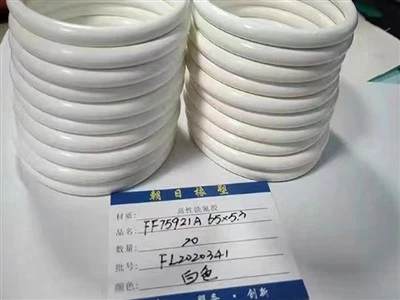
To learn more about our products or to discuss a custom order, reach out to our team today. We’re here to help you find the right fluorosilicone solution for your application.
Nitrile Rubber References
- “Fluorosilicone Elastomers: Properties and Applications,” Rubber Chemistry and Technology, 2018
- Modern Silicone Compounding and Processing, Society of Plastics Engineers, 2020
- Aerospace Fluorosilicone Standards, SAE International, 2019
Wuhu Chaori Rubber and Plastic Technology Co., Ltd.
As one of the most professional fluorosilicone manufacturers and suppliers in China, we have world-leading production equipment and strong manufacturing capabilities. Please feel free to wholesale bulk durable fluorosilicone made in China here and get quotation from our factory. For price consultation, contact us.
Address: Qihang Road, Xinwu Economic Development Zone, Wanzhi District, Wuhu City, Anhui Province, P.R. China
E-mail: chaori2026@163.com
WebSite: https://www.chaorirubber.com/
