If you’ve ever worked in a clinic, urgent care, or even a gym’s onsite medical checkup booth, you’ve probably seen an ECG machine in action. You stick those little sticky pads to a patient’s chest, arms, and legs, wait 10 seconds, and out comes a printout (or a screen readout) that the nurse or doctor uses to spot heart issues like arrhythmias, heart attacks, or even past heart damage. I’ve been an ECG machine supplier for over 8 years now, and I can’t tell you how many times a day I get an email or call from a clinic manager saying, “We just got a wonky ECG result—did our machine mess up?” ECG Machine

First off, let’s get this out of the way right away: yes, ECG machines can show false results. But before you start panicking and tossing every machine in your inventory, let’s break down why. Most of the time, it’s not the machine itself being “broken”—it’s a mix of user error, environmental weirdness, or even patient stuff that you wouldn’t think twice about until it messes up a reading. As someone who’s set up hundreds of machines for small clinics, urgent cares, and even mobile testing vans, I’ve seen just about every single one of these scenarios play out. Let’s start with the most common culprits, because 9 times out of 10, that’s where the problem is.
The number one cause of false ECG results? Bad pad placement. I don’t mean sticking them slightly off— I mean like, sticking a chest pad over a hairy chest and expecting it to work. Wait, hold on—let’s not make fun of that one, actually. A few months back, I had a customer in a rural clinic in Ohio call me screaming because their machine kept spitting out a reading that said the patient had a super dangerous ventricular tachycardia. The nurse re-ran the test three times, same result, and was 2 minutes away from calling an ambulance for a 52-year-old guy who was there for a routine checkup. Turns out, the nurse had skipped shaving the chest pad site because she only had a disposable razor that morning, and the hair was acting like a shield between the pad and the skin. The signal was all distorted, making the heart rate look way higher than it actually was. Once she clipped a small patch of hair, re-stuck the pads, and ran it again, the result was totally normal. That’s such a simple fix, but so easy to miss when you’re swamped with patients.
Another pad placement fail I see all the time: mixing up the limb leads. The little color-coded wires—red on the right arm, yellow on the left arm, green on the left leg, black on the right leg, right? But when a tech is running 10 tests an hour, they’ll grab a lead and stick it on the wrong ankle instead of the right leg, or swap the arms. I had a mobile testing company reach out to me last year, saying their machine kept showing a negative P wave that was triggering a false “possible atrial fibrillation” alert. They traced it back to one tech who was having a rough shift and swapped the right and left arm leads. Swapping arm leads is actually super common, and it doesn’t just mess up the P wave—it can flip the entire axis of the heart, making it look like there’s a serious conduction problem when there’s literally nothing wrong. Most modern machines will give you a little error message if the lead is disconnected, but they won’t yell at you if you swap two correctly connected leads.
Then there’s the environment. ECGs are sensitive little things, because they’re picking up tiny electrical signals from the heart—like, microvolt levels, way smaller than a phone’s battery. So if you’re in a room with other stuff running, you’re going to get interference. I remember setting up a machine for a dental clinic a couple of years ago, and their first test showed a ton of random spikes all over the readout, like someone was tapping the ECG really fast. The dentist was convinced the machine was broken, so I drove 2 hours out to look at it. Turned out, their x-ray machine was plugged into the same circuit as the ECG, and every time they fired up the x-ray, it spiked the ECG’s signal. I had them move the ECG to a different circuit on the other side of the room, away from the x-ray, the vacuum cleaner, and the wall AC unit, and the problem was gone. Other random environmental stuff: if the patient is wearing a wool sweater that’s super static-y, that creates its own electrical signals that get picked up by the pads. If a patient is moving a ton—like a shaky kid, or someone who’s anxious and can’t sit still for 10 seconds—their muscle movement gets mixed in with the heart’s signal, making it look like arrhythmia. I’ve had a parent bring in their 7-year-old for a sports physical, and the kid was so wiggly that the ECG kept showing a “possible ST elevation” which is a sign of a heart attack. They re-ran it 5 times, then handed the machine to me to test on my own hand (don’t laugh, I did it), and my wiggly fingers also gave a wonky readout. The fix: wait for the kid to calm down, have their mom hold their hand if needed, or run the test over again once they’re sitting still.
Wait, but what about the machine itself being faulty? Is that a thing? Yeah, occasionally. Not a lot—most modern ECG machines are super reliable, especially the ones we sell (I’m not gonna name-drop, but you can ask for our models that have a 5-year calibration warranty). But I’ve seen a few cheap knockoff machines that have sensor issues, or old machines that haven’t been calibrated in years, that give consistent false results. Last year, I had a customer in a small urgent care call me because their machine had been giving false “low voltage” results for 3 months, and they’d wasted hundreds of dollars on unnecessary follow-up tests with cardiologists. It turned out, the machine’s internal sensor for measuring voltage had gone bad, and it was reading 20% lower than it actually was. We swapped it out for a newer model, calibrated it on-site, and their results were perfect. The key here is regular maintenance—calibrating the machine every year, checking the leads for fraying, and replacing sticky pads when they expire. I always tell my customers: those sticky pads aren’t one-size-fits-all. If they’re past their expiration date, they lose their adhesive and can’t get a good signal, leading to false results. It sounds like a no-brainer, but you’d be shocked how many clinics run expired pads because they’re trying to save a buck.
Another thing that trips people up: patient history or pre-existing conditions. Wait, how is that a false result? Let’s say a patient has a pacemaker, or they take certain medications like beta-blockers or antihistamines, or even have a lot of body fat. The pacemaker’s electrical signals can interfere with the ECG reading, making it look like the heart’s rhythm is off, when it’s actually just the pacemaker doing its job. I had a patient with a pacemaker come in for a routine check, and their ECG showed a weird spike that looked like ventricular tachycardia. We checked his pacemaker settings, turned out that’s just a normal pacing spike that the machine was reading wrong because the nurse didn’t know how to adjust the machine’s settings for pacemaker patients. Same with body fat: if someone has a lot of adipose tissue between their heart and the skin, that blocks the electrical signal, making the voltage look lower than it actually is, leading to false low-voltage results. Medications too: some antidepressants, blood thinners, and even allergy meds can alter the heart’s electrical activity, leading to readings that look like arrhythmias or conduction issues when they’re just side effects. I always advise my customers to ask patients about their medications and devices before running an ECG— that extra 30 seconds can save them from a false result.
So, the big question: how do you avoid these false results? Let’s make this practical, not just a list of problems. First, train your staff properly. I offer free on-site training for all my customers, and I can’t stress enough how important that is. A well-trained tech is way less likely to mess up pad placement, swap leads, or miss environmental interference. Second, do regular machine checks. Once a month, run a test on yourself—stick the pads on your chest, arms, legs, run a quick test, and make sure the result is what you expect. If it’s off, you know something’s wrong with the machine or the leads. Third, replace supplies on time. Expired pads, frayed leads, dead batteries—those are all easy fixes that prevent false results. Fourth, account for the patient. Ask if they have a pacemaker, take meds, have hairy chests, or are anxious. Take 2 minutes to prep them before running the test—explain that they need to sit still, remove any tight clothes or sweaters, and if their chest is hairy, a quick clip is all you need.
I get it, false ECG results are scary. They can lead to unnecessary tests, scared patients, and even missed real issues if you ignore a real abnormal result because you’ve had too many false ones. But here’s the thing: as an ECG machine supplier, my job isn’t just to sell you a machine and disappear. I’m here to help you troubleshoot when you get a wonky result, train your staff, and make sure your machines are working the way they should. Over the years, I’ve built my business on that—most of my customers have been with me for 5+ years, because they know I don’t just sell machines, I support them.
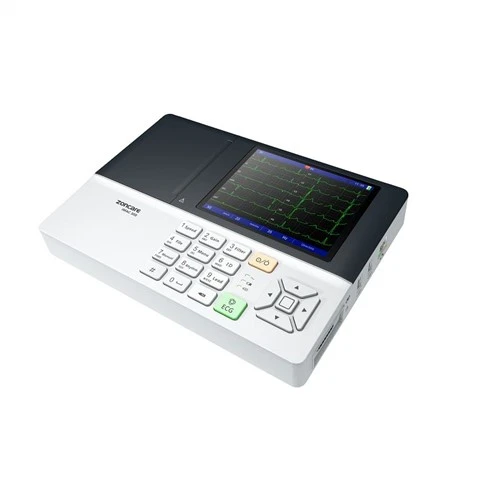
If you’re dealing with consistent false ECG results, or if you’re looking to upgrade your machines to avoid these issues, I’d be happy to hop on a call with you to walk through your setup, answer any questions you have, and help you figure out what’s going on. No hard sell, no pressure—just real advice from someone who’s been in this game for a long time and has seen every possible ECG quirk. Reach out whenever works for you.
ECG-20NT References:
- American Heart Association. (2022). ECG Interpretation Basics for Clinical Staff.
- Centers for Disease Control and Prevention. (2021). Common Medical Device Interference in Outpatient Settings.
- Journal of Electrocardiology. (2020). Sources of Error in Electrocardiographic Recording: A Systematic Review.
- World Health Organization. (2019). Guidelines for the Safe Use of Electrocardiography Devices in Primary Care.
Wuhan Zoncare Bio-medical Electronics Co., Ltd.
Wuhan Zoncare Bio-medical Electronics Co., Ltd. is one of the leading ecg machine manufacturers and suppliers in China. We warmly welcome you to wholesale discount ecg machine from our factory. All customized products are with high quality and low price. Contact us for more cheap products.
Address: Zoncare building, No.380, High-tech 2nd Road, Eastlake High-tech Development Zone, Wuhan, Hubei 430206 P. R. China.
E-mail: info@zoncare.com
WebSite: https://www.zoncareglobal.com/
