Hey everyone! I’m Alex, and I’ve been working in the metal kettle game for over seven years—selling, troubleshooting, and helping people find the exact kettle that fits their needs. Let’s be real: picking a metal kettle might seem super straightforward, right? You just grab one that looks shiny, fill it with water, and wait for it to boil. But if you’ve ever dealt with a kettle that rusts after a few months, takes forever to boil, or leaves a weird taste in your morning tea, you know there’s way more to it than that. Today, I’m breaking down what actually matters when you’re choosing a metal kettle—no fancy jargon, just real talk from someone who’s stood in front of hundreds of customers asking this exact question. Metal Kettle

First things first: let’s talk material. This is the make-or-break part, and it’s where most people get confused. You’ve probably seen stainless steel, aluminum, copper, even enameled metal kettles—so which one is right for you? Let’s start with stainless steel, because it’s the most popular and for good reason. Not all stainless steel is created equal, though. I always tell people to check for 18/8 or 18/10 stainless steel. That number refers to the chromium and nickel content—18% chromium for corrosion resistance, 8-10% nickel for durability and a smooth finish. Cheaper kettles use lower-grade stainless steel, like 201, which can rust over time, especially if you leave water sitting in it. I’ve had customers come back saying their $10 stainless steel kettle started getting brown spots after three months—yep, that’s the cheap stuff. A good 18/8 stainless steel kettle will last for years, resist rust, and won’t leach any weird flavors into your water. It’s also dishwasher-safe (wait, yes, most are—just check the label) and holds up really well to daily use.
Next up is aluminum. Aluminum kettles are lightweight and super affordable, but here’s the catch: pure aluminum can react with acidic liquids like lemon water or tomato-based drinks, leaving a metallic taste. Most good aluminum kettles have a non-reactive coating these days, but that coating can scratch off over time if you’re not careful with metal utensils. If you go with aluminum, make sure it’s anodized aluminum—this process creates a thick, protective layer that prevents reactions and makes it way more durable. It’s a solid pick if you’re on a tight budget, just don’t plan to use it for super acidic stuff or scrub it with steel wool.
Copper kettles are the fancy, aesthetic choice—they look amazing on a stovetop, like a little piece of art. But copper is a soft metal, so it usually has a lining of stainless steel or tin on the inside to stop it from reacting with water. The downside? They’re pricey, and you have to polish them regularly to keep that shiny copper look from tarnishing. I love them for people who want a kettle that doubles as kitchen decor, but if you’re someone who’d rather not spend 30 minutes every month buffing it, maybe skip this one. Enameled metal is another option—this is when you coat metal (usually steel or cast iron) with a glass-like finish. It’s non-reactive, comes in tons of fun colors, and is super easy to clean. The only downside is that if you chip the enamel, the metal underneath can rust, so you have to be careful not to drop it.
Okay, so material is sorted, but what about the type of kettle? Are we talking stovetop, electric, or maybe even camping kettles? That’s the next big call. Let’s start with stovetop kettles—these are the classic ones, the kind you put right on a gas or electric burner. They work with any stovetop, no electricity needed, which makes them reliable. But you have to make sure the bottom is flat and matches your stovetop type. If you have an induction stovetop, for example, the kettle needs to be induction-compatible—meaning it has a magnetic base. A lot of people buy a pretty stovetop kettle only to get home and realize it doesn’t work with their induction range. That’s a rookie mistake I see all the time. Pro tip: if you have induction, look for a kettle labeled “induction-ready” or check that the bottom is made of ferritic stainless steel (it will stick to a magnet—test it at the store if you’re unsure).
Electric kettles are super popular these days, and I get why—they boil water in like 2-3 minutes, way faster than stovetop. They also have auto shut-off, so you don’t have to stand there waiting for it to boil and risk it drying out. But electric kettles are only for electrical use, obviously—they won’t work over a campfire or a gas burner if the power goes out. Also, with electric kettles, you want to check where the heating element is. Some have the element on the bottom, which is easy to clean, while others have it hidden inside the body—those can be a pain to descale over time. Descale? Yeah, that’s another thing. All metal kettles get mineral buildup from hard water, so you need to descale them every few months. For electric kettles, look for ones with a removable lid—this makes it way easier to get to the inside to scrub out limescale.
Then there are camping kettles, which are usually made of lightweight aluminum or stainless steel, designed to be portable. They’re smaller, often have foldable handles, and can go over an open flame. If you’re a hiker or camper, these are a must, but for your home kitchen, they’re probably too small (most hold 1-2 cups, versus regular kettles which hold 4-8). I always ask customers what they’re using the kettle for most—if it’s just for morning tea for two, a smaller kettle is fine, but if you’re boiling water for pasta or a big batch of coffee, you’ll want something that holds at least 1.5 liters.
Now, let’s talk about features that actually matter—no gimmicks here. First, the lid. It might seem trivial, but a tight-fitting lid is key. If the lid is loose, steam will escape while it’s boiling, making it take longer, and you might get scalded by hot steam. Also, look for a lid that’s easy to remove—some kettles have lids that only open a little, which makes it hard to fill them or clean the inside. A wide mouth is another win for easy filling and cleaning, especially if you want to put a scrub brush inside to get rid of limescale.
The handle is another big one. You don’t want a handle that gets too hot to touch while the kettle’s boiling, right? Most good metal kettles have heat-resistant handles made of plastic, silicone, or wood. Avoid metal handles that are glued on—they can come loose over time. Look for handles that are ergonomic, meaning they fit comfortably in your hand, so you don’t spill hot water when you’re carrying it to pour tea or coffee. Spout design is important too—drippy spouts are the worst. Nothing’s more annoying than pouring boiling water and having it run down the side of the kettle instead of into your cup. A spout with a small opening or a rain spout design (you know, the ones that curve a little) will make pouring way cleaner.
Wait, what about noise? I get it, early morning kettles can wake up the whole house. Some metal kettles are louder than others, especially the cheap stovetop ones. Why? Because the material and thickness matter. Thicker metal kettles tend to be quieter—they vibrate less when the water boils. Electric kettles can be loud too, but newer models have noise-reducing technology. If you’re a light sleeper, look for reviews that mention low noise—just read a few customer comments instead of trusting the brand’s “quiet kettle” label.
Durability is something I talk about a lot because no one wants to replace their kettle every year. Let’s be real, we’ve all had that one friend who drops their kettle on the floor and it cracks. So, check the thickness of the metal. A thicker kettle will be more resistant to dents and dings. Also, the base—for stovetop kettles, a heavy, wrapped base (not just a thin layer) will distribute heat evenly, so the water boils faster and the kettle doesn’t get hot spots that can cause rust. For electric kettles, a sturdy base that fits securely on the power cord is important—no one wants their kettle to tip over because the plug is loose.
Oh, and let’s not forget about budget. I’ve had customers come in saying they want the cheapest kettle possible, but then come back a year later saying it broke and they wasted money. Here’s the thing: you get what you pay for. A $15 stainless steel kettle might work for a few months, but a $30-$50 kettle (depending on the type) will last for years. That said, you don’t need to drop $100 on a fancy copper one unless you really want it. For most people, a good 18/8 stainless steel stovetop or electric kettle in the $30-$50 range is perfect. Aluminum ones are usually $20-$30, which is great if you’re on a tight budget, just make sure it’s anodized.
Wait, let’s talk about common mistakes I see people make when choosing a metal kettle. First, buying based only on looks. Yeah, that copper kettle is pretty, but if it doesn’t work with your induction stovetop or is way too heavy, it’s not worth it. Second, not considering their water type. If you have really hard water, you’ll want a kettle that’s easy to descale—wide mouth, removable parts—because limescale will build up faster. Third, forgetting to check compatibility with your stove or outlet. For electric kettles, make sure your kitchen outlet is working, but more importantly, that the kettle’s power cord is long enough to reach it. For stovetop, flat bottom = non-negotiable if you have a glass or induction stove.
Another thing: safety features. Auto shut-off is a must for electric kettles—this prevents the kettle from boiling dry, which is a fire hazard. Some higher-end models also have boil-dry protection, which turns the kettle off automatically even if there’s no water in it. That’s a big plus if you’re someone who often multitasks and forgets about things. For stovetop kettles, a whistle is a safety feature too—you’ll hear it when the water’s boiling, so you don’t have to stand there watching it. Just make sure the whistle isn’t too loud (I’ve had customers complain about ear-piercing whistles) or too quiet that you don’t hear it.
Let me give you a quick example to make this real. Last month, a customer came to me saying her metal kettle was rusting inside, tasted like metal, and took forever to boil. She bought it online for $12, and it was 201 stainless steel—super low grade. I showed her the difference between 201 and 18/8, explained why the cheap stuff reacts, and recommended a mid-priced 18/8 electric kettle with a wide mouth and auto shut-off. She came back a week later saying it’s perfect, no rust, tastes great, boils in half the time. That’s the kind of thing I deal with every day.
So, let’s wrap this up with a step-by-step checklist, okay? First, figure out what you need it for: stovetop, electric, camping? Second, check the material: 18/8 stainless steel is your best bet for most homes, anodized aluminum if budget is tight, copper only if you don’t mind polishing. Third, make sure it’s compatible: induction? Check the magnet test; electric? Check the power and spout; stovetop? Check the flat bottom. Fourth, pick features that matter to you: tight lid, dripless spout, heat-resistant handle, auto shut-off, easy to clean. Fifth, set a budget and don’t go too cheap—spend a little more to get something that lasts.
At the end of the day, a metal kettle isn’t just a kitchen gadget—it’s something you’ll use every single day, multiple times a day. It’s for your morning coffee, your afternoon tea, making pasta when you’re busy, warming up water for baby formula. So taking the time to pick the right one makes such a difference. If you’re still unsure, or if you want to compare models, feel free to reach out to us for a procurement consultation. We’ve got a wide range of high-quality metal kettles for every need and budget, and we’re always happy to help you find exactly what you’re looking for. No pressure, just honest advice from people who know kettles inside and out.
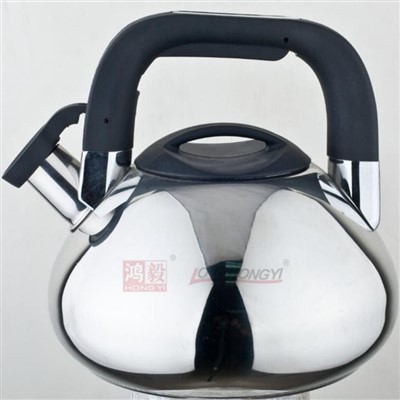
Wait, before I go, one last tip: if you do get your new metal kettle, take care of it! For stainless steel, don’t use abrasive scrubbers (like steel wool) on the inside—they can scratch the surface. Use a soft sponge and mild dish soap. For hard water, descale it every 2-3 months with vinegar or a store-bought descaling solution—fill it halfway with water, add a cup of vinegar, boil it, let it sit for 30 minutes, then rinse. That will keep it working like new for years.
Stainless Steel Tea Kettle References: 1. "Stainless Steel Grades for Food Contact Applications", International Stainless Steel Forum, 2022. 2. "Cookware Material Safety and Durability", USDA Food Safety and Inspection Service, 2021. 3. "Electric Kettle Energy Efficiency and Safety Standards", Consumer Reports, 2023.
Jiangmen Hongyi Stainless Steel Products Co., Ltd.
Jiangmen Hongyi Stainless Steel Products Co., Ltd. is one of the most professional metal kettle manufacturers and suppliers in China, specialized in providing high quality customized service. We warmly welcome you to buy cheap metal kettle made in China here from our factory. Good service and low price are available.
Address: Kunlun Industrial Zone, Siqian Town, Jiangmen City, Guangdong, China
E-mail: ANGEL6629@163.COM
WebSite: https://www.hongyihouseware.com/
