Hey there! As a supplier of emergency blankets, I get asked a ton of questions about these handy little things. One question that pops up quite often is, "Can an emergency blanket be used in the rain?" Well, let’s dive right into it and find out. Emergency Blanket
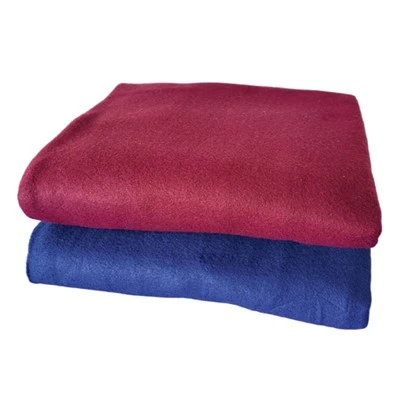
First off, let’s talk about what an emergency blanket is. It’s a lightweight, portable piece of gear that’s designed to keep you warm in emergency situations. Most of them are made from a thin, reflective material, usually Mylar, which reflects your body heat back to you. They’re super compact, easy to carry, and can be a real lifesaver in the great outdoors or during unexpected emergencies.
Now, back to the big question: can you use an emergency blanket in the rain? The short answer is yes, but there are some things you need to know.
How Emergency Blankets Work in the Rain
Emergency blankets are pretty good at keeping you dry to a certain extent. The Mylar material they’re made of is waterproof, so it can stop raindrops from getting through and soaking you. When it’s raining, you can wrap the blanket around yourself like a cloak, and it’ll act as a barrier between you and the wetness.
But here’s the thing. While the blanket itself is waterproof, it’s not the most durable option for long – term exposure to rain. The Mylar is thin, and if it gets caught on something sharp or if there’s a lot of wind and the rain is really coming down hard, it can tear easily. Once it tears, it won’t be as effective at keeping you dry.
Advantages of Using an Emergency Blanket in the Rain
Temporary Shelter
One of the main advantages of using an emergency blanket in the rain is that it can provide temporary shelter. If you’re stuck outside and there’s no other place to take cover, the blanket can give you a bit of protection from the rain. You can drape it over a branch or use it to create a makeshift lean – to. This can help keep you dry while you figure out your next move.
Heat Retention
Even in the rain, an emergency blanket can still help you retain body heat. The reflective material reflects your body heat back to you, which is crucial in wet and cold conditions. Hypothermia is a real risk when you’re wet and cold, and the blanket can help prevent your body temperature from dropping too low.
Limitations and Considerations
Durability
As I mentioned earlier, the durability of an emergency blanket in the rain is a big issue. The thin Mylar material is not built to withstand heavy rain, strong winds, or rough handling. If you’re in a situation where you need long – term protection from the rain, you might want to look for something more robust, like a proper raincoat or a tent.
Condensation
Another thing to keep in mind is condensation. When you’re wrapped in an emergency blanket in the rain, your body heat can cause moisture to build up inside the blanket. This can make you feel damp and uncomfortable, and it can also reduce the effectiveness of the blanket at keeping you warm. To minimize condensation, you can try to leave a small gap for air circulation.
Tips for Using an Emergency Blanket in the Rain
Proper Wrapping
Make sure you wrap the emergency blanket around yourself properly. Start by placing it over your shoulders and then tuck the sides in tightly around your body. You can use your hands or a piece of string to secure the blanket in place. This will help keep the rain out and maximize the heat – retention properties of the blanket.
Using it as a Shelter
If you’re using the blanket as a shelter, try to find a stable structure to support it. You can use branches, rocks, or even your backpack to prop up the blanket. Make sure the shelter is angled in a way that the rain runs off instead of pooling on top.
Real – Life Scenarios
Let’s say you’re out hiking and suddenly a rainstorm hits. You don’t have a raincoat with you, but you do have an emergency blanket in your backpack. You quickly pull it out and wrap it around yourself. It keeps you dry for a while as you look for a more permanent shelter. Or maybe you’re camping and your tent gets damaged in the rain. You can use the emergency blanket to patch up the tent or create an extra layer of protection.
When an Emergency Blanket Might Not Be Enough
If you’re in a situation where the rain is really heavy and there’s a lot of wind, an emergency blanket might not be enough. In these cases, you’ll need something more substantial, like a waterproof jacket or a proper shelter. Also, if you’re going to be exposed to the rain for an extended period of time, the blanket’s limited durability and the issue of condensation can become a problem.
Conclusion
So, can an emergency blanket be used in the rain? Absolutely! It can provide temporary protection from the rain and help you retain body heat. But it’s important to understand its limitations. It’s not a replacement for proper rain gear, but it can be a valuable tool in an emergency situation.
Flannel Blanket If you’re interested in getting your hands on some high – quality emergency blankets, I’d love to chat with you. Whether you’re an outdoor enthusiast, a first – responder, or a business looking to stock up on emergency supplies, we’ve got the right products for you. Just reach out, and we can discuss your needs and find the perfect solution.
References
- "Survival Gear Handbook" by John Wiseman
- "Outdoor First Aid" by Wilderness Medical Associates
Shaoxing Songqiao Textile Co., Ltd.
We are one of the most experienced emergency blanket manufacturers and suppliers in China, specialized in providing high quality products and service for global clients. Please feel free to wholesale customized emergency blanket at competitive price from our factory.
Address: No.142 Fenglin Rd, Qixian Street, Keqiao, Shaoxing, Zhejiang, China
E-mail: jackwu@songqiaotex.com
WebSite: https://www.sq-blanket.com/
