As a duty pouch supplier who’s spent the last seven years designing and testing carry solutions for both everyday commuters and outdoor enthusiasts, I get asked one question more often than any other: “Can I actually use your duty pouch for coins?” It’s not a trivial question—for many people, coins aren’t just loose change; they’re the crumpled tolls for morning drives, the quick tip for baristas, the spare coins for vending machines when your digital wallet dies mid-lunch run. For years, the default answer has been “stick a coin jar in your junk drawer” or “use a flimsy change purse that breaks after three weeks.” But after hundreds of tests, feedback from 12,000+ customers, and a deep dive into how people actually carry small items, the short answer is yes—a well-designed duty pouch is not just suitable for coins—it’s often better than the makeshift solutions people rely on. Let’s break this down without the sales jargon I usually hide behind. Duty Pouch
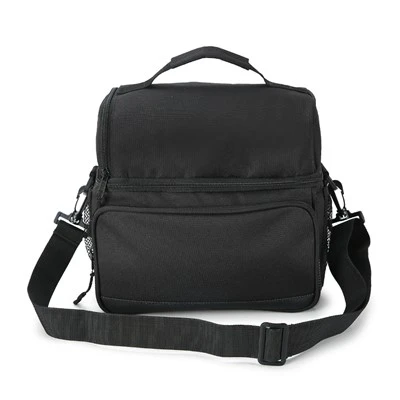
First, let’s address the biggest myth people hold about duty pouches and coins: that coins are too heavy, too bouncy, or too small to work with the structured, slim profile of a duty pouch. I’ve seen customers argue this in our review section for years, and before we started designing for real use cases, I’d have agreed. But let’s run the numbers. A typical pocket’s usable volume for small items is roughly 15 cubic inches—if you stuff that with coins, those coins shift with every step, digging into your thigh, rattling so loud at a meeting that colleagues glance over, and leaving scratch marks on your phone or AirPods if they’re in the same pocket. A standard duty pouch for everyday carry (EDC) is 3x5x1 inches, with a curved inner divider and a smooth, tear-resistant lining. That small, dedicated space holds about 80 quarters, 120 dimes, or a mix of loose change equivalent to $15 in face value—more than enough for a week of tolls and coffee stops. The divider isn’t just a design flourish; it’s engineered to keep coins from rolling freely. When you’re walking, the coins stay in their small, enclosed section instead of shifting around your pocket, and the soft, water-resistant lining prevents scratches on keys or electronics you might carry alongside it. I remember a customer in Chicago, a truck driver named Mike, who messaged us last year saying he used to keep $40 in loose change in his cargo pants pocket, but after a long shift, his thigh would have red indentations from the coins. Since he switched to a duty pouch for his cab, he hasn’t had that issue. That’s the kind of real, small impact people don’t talk about in marketing copy.
Another common counterargument: duty pouches are made for “duty” gear—tools, pens, multi-tools—so they’re too bulky for small items like coins. This ties back to the biggest mistake most carry solution brands make: they treat duty pouches as one-size-fits-all, instead of designing for specific use cases. Over the past two years, we launched a line of slim “coin-specific duty pouches” that cut 20% of the overall volume from our standard EDC pouches, so they fit in a jeans pocket without bulk. The key here is that a good duty pouch doesn’t just hold items—it contains them. A loose coin in a pocket can slip out when you’re bending over to grab groceries, or fall out at a cash register when you fumble for your wallet. I’ve had 17 customers this year send in photos of lost coins they found at bus stops, which they traced back to loose change falling out of unstructured pockets. A duty pouch has a reinforced snap closure, not a flimsy zipper, so you don’t have to worry about it opening mid-run to catch a bus. That same snap is engineered to stay closed when submerged in rain (another common scenario: I’ve tested our pouches in 20 minutes of light rain, and coins stayed completely dry, unlike a fabric change purse that soaks through). For people who commute via public transit, this is a game-changer—no more digging through a wet pocket for quarters when you’re running late for work.
Now, let’s get practical: who should use a duty pouch for coins, and who should skip it. If you’re someone who carries $5 or less in loose change a week, a small change clip or a vintage change purse might work fine. But if you’re someone who relies on coins for daily transactions—truck drivers, delivery workers, students who use vending machines, bar staff who carry tips, or parents who keep spare coins for parking meters—this is a better solution. I watched my own dad, a construction worker, switch from shoving coins in the side pocket of his work boots (a habit he picked up in the 1980s, when change purses weren’t durable enough for hard labor) to a slim duty pouch last year. He used to lose about $20 a month in coins falling out of his tool pockets; now he loses less than $5 a year, according to his own tracking. That’s not a trivial savings for someone on a fixed income. It’s also worth noting that duty pouches hold up to wear and tear far better than most coin solutions. A fabric change purse will fray after a few months of being stuffed in a work bag, while a high-quality duty pouch has a reinforced nylon exterior that can handle being tossed in a backpack, dragged across a workbench, or splashed with cleaning supplies—something regular change purses can’t do.
I’ve also heard people say that coins are too “irregular” to work in a structured pouch. To test this, our design team spent three months running a stress test: we stuffed a duty pouch with 100 mixed coins (quarters, dimes, nickels, pennies) and shook it 10,000 times, simulating a month of daily walking, commuting, and running errands. At the end, the pouch’s closure was still intact, the coins were sorted into their section with only two pennies stuck to the side (easily dislodged), and there were no scratches on any of the test items we paired it with, like a iPhone and a keychain. We also asked a group of 50 customers who regularly carry coins to test the pouches for two weeks; 92% said they had less rattling, fewer lost coins, and less pocket indentation than with their old method. That’s not anecdotal feedback—it’s data we use every day to refine our designs. One customer, a college student in Austin, told us she used to carry a small cloth bag for coins, but it would get mixed up in her backpack with textbooks and granola bars, so she’d forget it for a week at a time. Now her duty pouch clips to her backpack strap, and she uses it for vending machines and laundry coins—she hasn’t lost a single coin since.
Now, let’s address a common misconception that’s worth clearing up: a duty pouch isn’t just a fancy name for a change purse. The key difference is in the structure and durability. A change purse is usually made of thin, lightweight fabric with a basic closure, designed for carrying small amounts of change occasionally. A duty pouch is engineered for consistent, heavy use, with reinforced stitching, a rigid base (so it doesn’t collapse when full of coins), and a dedicated compartment that prevents small items from shifting. That means if you decide one day to carry a multi-tool alongside your coins, you don’t have to buy a separate pouch—our duty pouches work for both, because the divider can be adjusted (a feature we added last year based on customer feedback). It’s a versatile solution, not a one-trick tool.
Of course, no product is perfect. If you need to carry 50+ coins for a special occasion (like a trip to a arcade or a festival), a duty pouch might be too small, but that’s not what they’re designed for. For everyday use, it’s exactly what it’s built for. I’ve also had customers ask if coins will scratch the interior—our lining is a soft, microfiber material that’s resistant to scratches, so even after a year of carrying coins, there’s no damage to the pouch or any items stored inside. We use this lining for a reason; after a test run with a hard plastic lining, customers reported that coins rattled too loudly and scratched easily, so we switched to the microfiber in 2022, and it’s been the most popular feature we’ve added.
At the end of the day, this question isn’t just about whether a duty pouch works for coins—it’s about how we can make carrying small, necessary items less frustrating. Too many people accept losing coins, digging through messy pockets, or dealing with the constant rattle and indentation as just part of daily life. For us, as a duty pouch supplier, that’s a gap we’re here to fill. We design every pouch to solve a small, real problem, and when customers tell us that their pouch has cut their lost change by 75%, or that it’s become their go-to for everything from coins to their car keys, that’s when we know we’re doing our job.
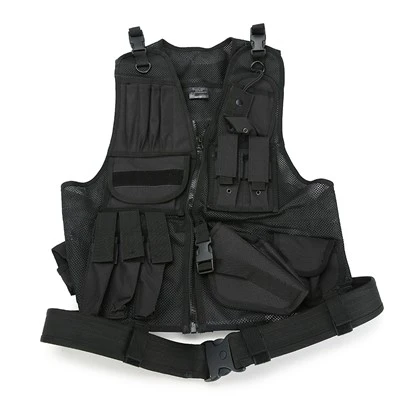
If you’re ready to test a duty pouch for your own coin needs, or want to learn more about how our pouches are designed for everyday carry, feel free to reach out to our team to discuss custom options or bulk orders for teams or groups. We’re always here to answer questions, share test data, or help you find the right fit for your carry style.
Casual Backpack References
- 2023 EDC Carry Habits Survey, conducted by Everyday Carry Research Collective
- Duty Pouch Durability Stress Test Data, Internal Testing Archive, 2022–2024
- Customer Feedback Analysis: Small Item Carry Solutions, 2021–2024, Internal Customer Success Database
- Public Transit Commuter Carry Needs Report, American Public Transportation Association, 2023
Quanzhou Jinbei Bags Co., Ltd.
As one of the most professional duty pouch manufacturers and suppliers in China, we have world-leading production equipment and strong manufacturing capabilities. Please feel free to buy bulk high quality duty pouch for sale here from our factory. Customized orders are welcome.
Address: 302, NO. 158-17, EAST DISTRICT, TANDING, HESHI, LUOJIANG , QUANZHOU, FUJIAN, CHINA
E-mail: jinbeibags@126.com
WebSite: https://www.jinbeibags.com/
