Hey there! I’m a supplier of NBR O Rings, and today I wanna chat about something that’s super important in the rubber sealing world: the water absorption rate of NBR O Rings. NBR O Ring
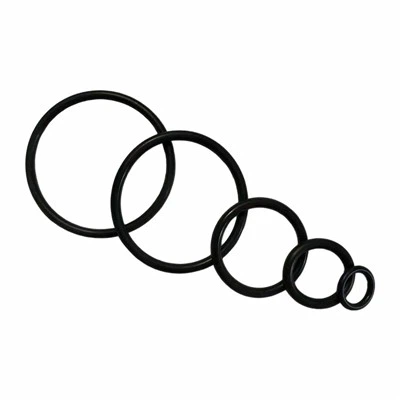
What’s NBR Anyway?
First things first, let’s talk a bit about NBR. NBR stands for Nitrile Butadiene Rubber. It’s a synthetic rubber that’s created by copolymerizing butadiene and acrylonitrile. This kind of rubber is a real work – horse in many industries. It’s got great oil resistance, and it can handle a wide range of temperatures. That’s why it’s commonly used in automotive parts, oil seals, and of course, our little heroes, O Rings.
Why Water Absorption Rate Matters
The water absorption rate of an NBR O Ring is a big deal. You see, when an O Ring absorbs water, it can swell. And that swelling can have a huge impact on how well it seals. If it swells too much, it might get too big for its intended space, and it could even start to leak. On the other hand, if it doesn’t absorb water at all in a moist environment, it might dry out and crack over time.
Think about it in terms of a car engine. There are lots of places where NBR O Rings are used to seal things like coolant lines. If the water absorption rate of those O Rings is off, it could lead to coolant leaks. And that’s not just a minor inconvenience; it can cause serious damage to the engine.
How Is Water Absorption Rate Measured?
Measuring the water absorption rate of an NBR O Ring is a pretty straightforward process. Usually, we take a sample of the O Ring, weigh it to get its initial weight (let’s call it W1). Then we immerse the O Ring in distilled water at a specific temperature (usually around 23°C) for a set period of time, like 24 hours or 7 days.
After that time is up, we take the O Ring out of the water, dry it off gently with a cloth, and weigh it again. Let’s call this new weight W2. The water absorption rate (%) is calculated using the formula:
[
\text{Water Absorption Rate} = \frac{W2 – W1}{W1} \times 100%
]
Factors Affecting the Water Absorption Rate
Acrylonitrile Content
The acrylonitrile content in NBR has a major impact on its water absorption rate. Generally, as the acrylonitrile content increases, the water absorption rate decreases. This is because acrylonitrile has polar groups that interact with each other, making the rubber less permeable to water. So, if you need an O Ring with low water absorption, you might want to go for an NBR with a higher acrylonitrile content.
Temperature
Temperature also plays a big role. When the temperature goes up, the water absorption rate usually increases. This is because higher temperatures give water molecules more energy to penetrate the rubber. For example, if you’re using NBR O Rings in a high – temperature environment, like near a factory furnace, the O Rings might absorb more water than they would at room temperature.
Contact Time
The longer an NBR O Ring is in contact with water, the more water it will absorb. This is pretty obvious. So, if an O Ring is constantly in a wet environment, it will reach a higher water absorption level compared to one that’s only in contact with water occasionally.
Ideal Water Absorption Rate for Different Applications
The ideal water absorption rate can vary greatly depending on the application.
In Automotive Applications
In cars, where there are often different fluids and temperature changes, an NBR O Ring with a relatively low water absorption rate is usually preferred. Automotive engineers like O Rings that have a water absorption rate of around 5% – 10% after 24 hours in water. This helps ensure that the O Rings won’t swell too much and cause leaks in the engine, transmission, or other parts.
In Plumbing
In plumbing applications, where the O Rings are mainly in contact with water, a slightly higher water absorption rate might be okay. As long as the O Ring doesn’t swell to the point where it loses its sealing ability, a water absorption rate of up to 15% after 7 days might be acceptable.
Quality Control and Our NBR O Rings
As a supplier of NBR O Rings, I take quality control really seriously. We test every batch of our O Rings to make sure their water absorption rates are within the desired range for different applications.
We also have a team of experts who are always looking into new ways to improve the properties of our NBR O Rings. For example, we’re constantly researching how to adjust the acrylonitrile content to get the best water absorption characteristics for different uses.
Conclusion: Making the Right Choice
So, when it comes to choosing an NBR O Ring, understanding the water absorption rate is crucial. You need to take into account the application, the temperature, and how long the O Ring will be in contact with water.

If you’re in the market for high – quality NBR O Rings with the right water absorption rate for your specific needs, I’d love to have a chat with you. Whether you’re working on an automotive project, plumbing, or any other industry that needs reliable sealing solutions, we’ve got you covered.
Rubber Bumper Contact me to discuss your requirements and place your order. I’m always here to help you find the perfect NBR O Ring for your job.
References
- ASTM D471 – Standard Test Method for Rubber Property – Effect of Liquids
- "Rubber Technology Handbook" by Werner Hofmann
Haining Chaoyue Seals Co., Ltd.
As one of the most professional nbr o ring manufacturers and suppliers in China, we offer a wide range of products with superior quality. Please feel free to wholesale high quality nbr o ring made in China here from our factory. Also, custom service is available.
Address: Building 9, 158 Lianhong Road, Yuanhua Town, Jiaxing, Zhejiang, China.
E-mail: chaoyue@cyseals.com
WebSite: https://www.hncyseal.com/
