When it comes to control cables, one of the most frequently asked questions is: "How many cores can a control cable have?" As a seasoned control cable supplier, I’ve encountered this query numerous times from various clients, ranging from small – scale electrical contractors to large industrial enterprises. In this blog, I’ll delve into the factors that determine the number of cores in a control cable, the common core configurations, and how to choose the right number of cores for your specific application. Control Cable

Factors Influencing the Number of Cores
Application Requirements
The primary factor dictating the number of cores in a control cable is the application it is intended for. In simple control systems, such as those used in small machinery or basic automation setups, a cable with a relatively small number of cores may suffice. For example, a simple conveyor belt control system might only require 2 – 4 cores to transmit signals for start, stop, and speed control.
On the other hand, in complex industrial processes like chemical plants or large – scale manufacturing facilities, the number of cores can be significantly higher. These applications often involve multiple sensors, actuators, and control devices. For instance, in a chemical reactor control system, there could be sensors for temperature, pressure, flow rate, and level, each requiring a separate core to transmit its signal back to the control unit. Additionally, there may be cores dedicated to power supply for actuators like valves and pumps. So, in such a scenario, a control cable with 10 – 20 or even more cores might be necessary.
Signal Isolation
Another crucial factor is signal isolation. Different signals in a control system can interfere with each other if they are not properly isolated. For example, analog signals are more susceptible to interference from digital signals. To prevent this, each type of signal may need to be carried on a separate core, and sometimes additional shielding may be required. In a system where there are both analog and digital signals, a cable with a sufficient number of cores allows for proper separation of these signals, ensuring reliable operation.
Future Expansion
When designing a control system, it’s important to consider future expansion. A company may plan to add more sensors or control devices to its system in the future. By choosing a control cable with a higher number of cores than currently needed, it provides room for expansion without the need to replace the entire cable. This can save both time and money in the long run. For example, if a company is starting with a basic control system but anticipates adding more functionality in the next few years, a cable with 16 cores instead of 8 might be a wise choice.
Common Core Configurations
Single – Core Cables
Single – core cables are the simplest form of control cables. They are typically used for applications where only one signal needs to be transmitted, such as a single power supply line or a simple on – off control signal. Single – core cables are often used in low – voltage and low – current applications, like in small household appliances or basic lighting control systems.
Multi – Core Cables
Multi – core cables are much more common in industrial and commercial applications. The most common multi – core configurations include 2 – core, 3 – core, 4 – core, 6 – core, 8 – core, 10 – core, 12 – core, 16 – core, and 20 – core cables.
- 2 – Core Cables: These are commonly used for simple power supply or basic control circuits, such as in doorbell systems or small fans.
- 3 – Core Cables: They are often used in applications where a neutral wire is required in addition to the live and earth wires, like in some lighting fixtures or small electrical appliances.
- 4 – Core Cables: These are suitable for applications that require two pairs of signals, such as in some motor control circuits where forward and reverse signals are needed.
- 6 – Core and 8 – Core Cables: These are commonly used in more complex control systems, such as in small – to – medium – sized automation systems. They can carry multiple signals for sensors, actuators, and control commands.
- 10 – Core to 20 – Core Cables: These are used in large – scale industrial applications, such as in manufacturing plants, power generation facilities, and transportation systems. They can accommodate a large number of sensors, actuators, and control signals.
Choosing the Right Number of Cores
Assessing Your Current Needs
The first step in choosing the right number of cores is to assess your current application requirements. Make a list of all the sensors, actuators, and control devices that need to be connected to the control cable. Determine the type of signals (analog or digital) that each device will transmit or receive. Based on this information, calculate the minimum number of cores required to accommodate all the signals.
Considering Future Expansion
As mentioned earlier, it’s important to consider future expansion. Look at your company’s growth plans and determine if there is a possibility of adding more sensors or control devices in the future. If so, choose a control cable with a few extra cores to accommodate these potential additions.
Consulting with Experts
If you’re unsure about the number of cores you need, it’s always a good idea to consult with experts. As a control cable supplier, we have a team of experienced engineers who can help you analyze your application requirements and recommend the most suitable control cable. We can also provide guidance on cable specifications, such as insulation material, shielding, and voltage rating.
Our Offerings as a Control Cable Supplier
At our company, we offer a wide range of control cables with different core configurations to meet the diverse needs of our customers. Our cables are manufactured using high – quality materials and advanced production techniques to ensure reliable performance and long – term durability.
We understand that every application is unique, and we are committed to providing customized solutions. Whether you need a simple 2 – core cable for a small project or a complex 20 – core cable for a large – scale industrial application, we can supply the right cable for you. Our team can also assist you in cable installation and provide after – sales support to ensure that your control system operates smoothly.
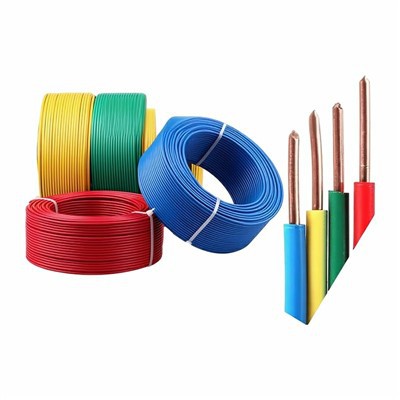
If you’re in the market for control cables, we invite you to get in touch with us. Our sales team is ready to answer your questions, provide detailed product information, and discuss your specific requirements. We believe that by working together, we can find the perfect control cable solution for your project.
Conclusion
Wire for Wiring A House The number of cores in a control cable depends on various factors, including application requirements, signal isolation, and future expansion. By understanding these factors and choosing the right number of cores, you can ensure the reliable operation of your control system. As a control cable supplier, we are dedicated to providing high – quality products and excellent service to our customers. If you have any questions or need assistance in selecting the right control cable, don’t hesitate to contact us. We look forward to working with you on your next project.
References
- Electrical Installation Handbook, Schneider Electric
- Control Engineering Handbook, CRC Press
- Cable Installation Guidelines, International Electrotechnical Commission (IEC)
Hebei Hualun Cable Co., Ltd.
As one of the leading control cable manufacturers and suppliers in China, we offer a wide range of products with superior quality. We warmly welcome you to buy cheap control cable for sale here from our factory. For price consultation, contact us.
Address: XINGBIEYING INDUSTRIAL ZONE, HEBEI PROVINCE CHINA
E-mail: 850078115@qq.com
WebSite: https://www.hualuncables.com/
